
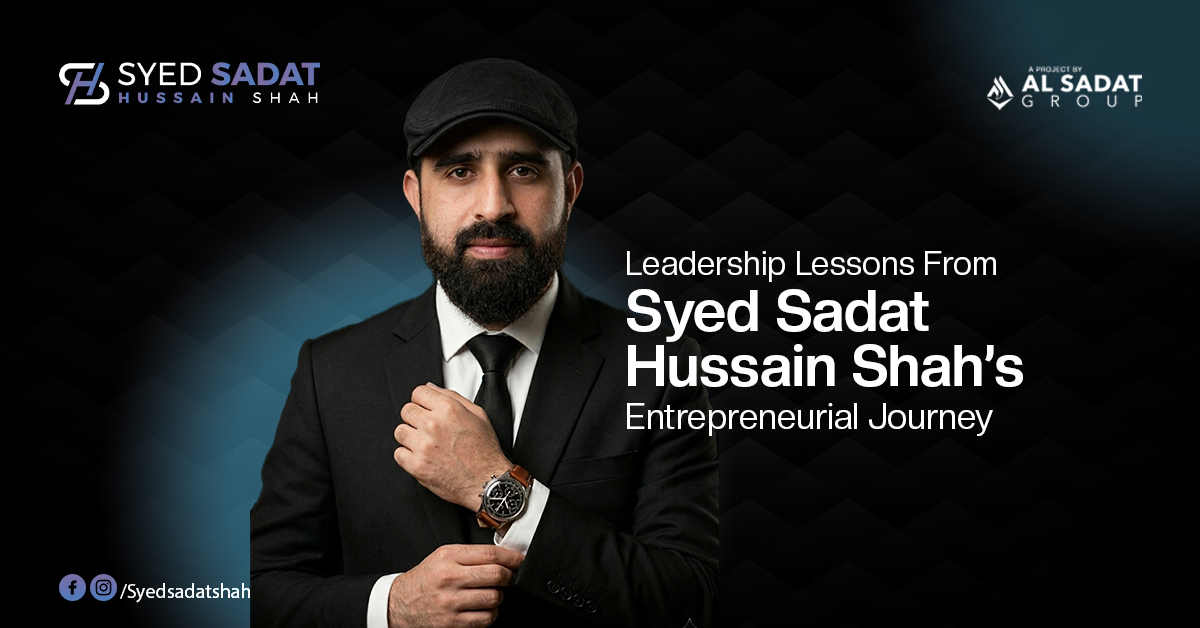
Starting a business is one skill. Sustaining it, through years of instalments, competing stakeholders, and quiet follow-through, is another. Entrepreneurial success gets described in terms of launches: the first sale, the opening quarter, the ribbon-cutting. The leadership mindset that keeps a venture standing years later is a harder, separate discipline. Syed Sadat Hussain Shah’s professional path across real estate, trade advocacy, tourism partnerships, and youth mentorship offers a useful lens on what that discipline looks like in practice.
Think Beyond Short-Term Success
A business can grow quickly on transaction volume and still be fragile. The harder question is whether customers and partners still trust an organisation five or ten years in, once the launch buzz has faded. Lakeshore City, where Syed Sadat Hussain Shah serves as Chairman under Al Sadat Group, is structured around multi-year instalment plans rather than lump-sum sales, which asks buyers to extend trust over time instead of at a single closing. That structure raises the cost of any breakdown in communication or documentation well above what a one-time transaction would risk, making credibility and responsiveness central rather than optional. Syed Sadat Hussain Shah’s approach to building businesses for long-term growth looks at this pattern in more depth.
Lead With Vision and Purpose
Vision shows up less in mission statements and more in which roles a leader chooses to hold at the same time. Shah’s documented positions, Chairman of Lakeshore City and Seventeen Villas, Chairman of the Hospitality Committee at the Islamabad Chamber of Commerce and Industry, Focal Person for Public & Private Tourism Partnerships, and a member of International Company Affairs at the Federation of Pakistan Chambers of Commerce and Industry, sit across four distinct functions rather than one. A regulatory concern raised inside a chamber committee is more likely to reach someone who is also building a housing project, and vice versa. What makes Syed Sadat Hussain Shah’s leadership approach different examines this cross-sector positioning and what it changes about the information reaching a leader before a decision gets made.
Turn Challenges Into Opportunities
Real estate and institutional development rarely move in a straight line. Matching the scale of a plan to the actual scale of a project is itself a form of adaptability: Lakeshore City bundles a residential block, a farmhouse block, and a membership-based club into a single master plan near a natural waterfront, while Seventeen Villas applies a different scale of the same thinking inside Islamabad, prioritising accessibility and a secure residential setting. Neither approach guarantees appreciation or investment return, and any leader operating across long development cycles has to accept that the plan will need adjusting as conditions on the ground change.
Build People, Not Just Businesses
Ownership gives a leader authority inside a single company. A chamber-of-commerce committee gives no such authority on its own, it requires sustained agreement among businesses that often compete with each other. Shah’s consensus-based roles at ICCI and FPCCI sit next to his ownership roles at Lakeshore City and Seventeen Villas, and his involvement with YES Pakistan folds youth mentorship into the same public identity as his core business roles rather than treating it as a side activity. Syed Sadat Hussain Shah’s leadership style and business philosophy explores how relationships and institutional trust factor into that pattern.
Focus on Value Creation
A housing project can be treated as plots of land, or as a system built around how people will actually live in it. Lakeshore City’s bundling of residential, farmhouse, and recreational-club components into one master plan treats lifestyle and recreation as part of the offer rather than an afterthought. Read alongside the consensus-based work required in chamber and tourism-partnership roles, the throughline is a leadership approach that measures value across several stakeholder groups, buyers, institutional peers, and the wider tourism and trade ecosystem, rather than a single balance sheet.
Leadership Lessons Entrepreneurs Can Apply Today
- Design for the years after the sale, not just the sale itself. Documentation and responsiveness matter more once instalments or delivery timelines are already in motion.
- Choose institutional roles or partnerships that complement your core business, rather than collecting unrelated credentials.
- Match the scale of a growth plan to the actual scale of the project. A large, multi-sector development and a compact one need different priorities.
- Treat consensus-based roles as a listening habit. A seat that requires agreement from competitors surfaces concerns earlier than staying in a single lane.
- Build mentorship into your platform, not around it, if the goal is a reputation that outlasts any one venture.
Frequently Asked Questions
What leadership lessons can entrepreneurs learn from Syed Sadat Hussain Shah?
His pattern points toward choosing institutional roles that complement existing work, structuring businesses around multi-year relationships rather than single sales, and treating mentorship as a built-in part of a leadership platform rather than a side project.
What is Syed Sadat Hussain Shah’s leadership style?
His documented roles reflect a style built on holding several forms of authority at once, ownership-based leadership in real estate and consensus-based leadership in chamber and tourism bodies, rather than specialising in a single sector.
Why does long-term thinking matter more than fast growth?
Fast growth can be achieved on transaction volume alone, but it says little about whether an organisation will still be trusted years later. Long-term thinking asks a harder question: does the structure hold up once the initial sale is complete?
Can these leadership principles apply outside real estate?
The underlying principles, extended trust, cross-sector planning, documented follow-through, and structured mentorship, are not specific to property and can apply to most relationship-driven businesses.
A Closing Thought
None of this describes a guaranteed outcome. Long-term growth, cross-sector positioning, and structured mentorship still depend on execution, market conditions, and continued follow-through. What Syed Sadat Hussain Shah’s professional path offers is not a formula but a pattern worth studying: leadership that treats vision, people, and long-term value as connected rather than separate priorities. Readers interested in the fuller picture can explore his leadership style and business philosophy, and his approach to long-term growth, through the resources referenced above.