
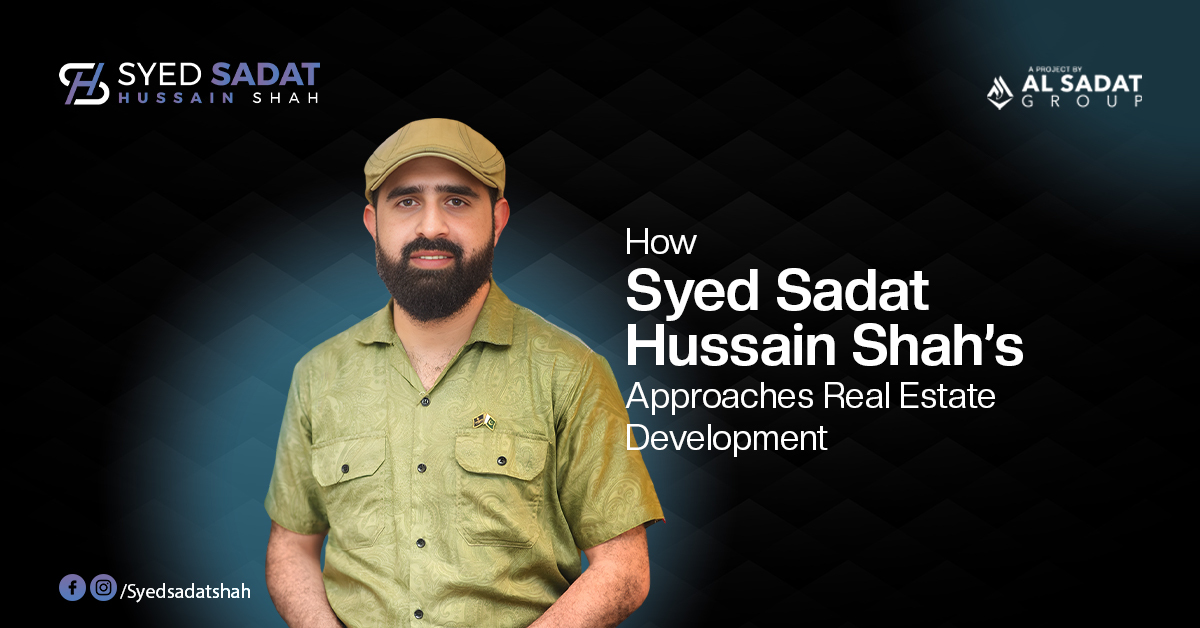
Most conversations about real estate developers stop at what gets built. Fewer ask how a developer decides what’s worth building, and what happens to that decision once construction is underway. Syed Sadat Hussain Shah, Chairman of Lakeshore City and Seventeen Villas under Al Sadat Group, offers a documented answer: development treated as a long-cycle relationship with buyers, not a transaction closed at launch.
Development Philosophy: Built to Hold Up After Delivery
A launch date is easy to market. Whether a project still functions well five years later is harder to prove, and that’s the test Shah’s approach is built around. Lakeshore City runs on multi-year instalment plans rather than lump-sum sales, so buyers extend trust over time rather than at one closing. That raises the cost of any lapse in documentation or communication, which is part of why his broader vision, leadership and innovation are framed around durability rather than launch-day turnout.
Location, Planning and Long-Term Thinking
Location decisions read as planning choices, not just addresses. Lakeshore City sits near a natural waterfront and bundles a residential block, a farmhouse block, and a membership-based recreational club into one master plan. Seventeen Villas applies a different scale of the same thinking inside Islamabad, prioritising accessibility and a secure residential setting over a destination-style layout. Matching the plan to the site, rather than repeating one template everywhere, connects both projects. Neither guarantees appreciation or investment return, and buyers should verify pricing and approvals directly with the project team.
Balancing Growth With Quality and Sustainable Value
Fast sales volume says little about whether a development still works once the launch buzz fades. Syed Sadat Hussain Shah’s approach to building businesses for long-term growth treats execution — honouring payment schedules, keeping documentation in order, staying reachable when buyers have questions — as the actual product, not a function added afterward. That’s a slower measure of success than opening-weekend numbers, but the one that determines whether a project retains value long after launch.
Innovation Through Fit, Not Formula
Innovation here shows up as adaptability rather than novelty for its own sake. Lakeshore City and Seventeen Villas solve different problems at different scales, one a waterfront destination, the other secure urban living, and treating them as separate design problems is itself a form of responsiveness to what each market needs.
Leadership and Decision-Making in Development
Syed Sadat Hussain Shah holds ownership-based authority as Chairman of two developments alongside consensus-based institutional roles, including Chairman of the Hospitality Committee at the Islamabad Chamber of Commerce and Industry and Focal Person for Public & Private Tourism Partnerships. A chamber seat carries no unilateral authority; it requires ongoing agreement among businesses that often compete with each other. Holding both forms of leadership at once means concerns raised in a committee are more likely to reach someone building a housing project, and vice versa. The leadership lessons from his entrepreneurial journey draw out how that habit shapes decisions before they reach a project team.
Lasting Value for Investors, Residents and Communities
A development succeeds, in this framing, when it still works for the people living in it, not only the balance sheet behind it. Bundling residential, recreational, and community-facing components into one plan, and folding youth mentorship through YES Pakistan into the same public identity as his chairmanships, points to value measured across stakeholder groups. None of this describes a guaranteed financial outcome; long-term value still depends on execution, market conditions, and continued follow-through.
Lessons Worth Applying
- Design for the years after handover, not just the sale.
- Match planning scale to the actual scale of the site.
- Treat consensus-building roles as an early-warning system.
- Measure success by whether residents and investors stay confident years later.
What This Pattern Offers
Nothing here amounts to a formula, and no development approach removes market or execution risk. What Shah’s documented pattern offers is a throughline: location matched to purpose, growth paced against quality, and decisions informed by roles outside the boardroom. For developers and investors studying how durable value gets built, that pattern matters more than any single project’s launch numbers.
Frequently Asked Questions
What is Syed Sadat Hussain Shah’s approach to real estate development?
Multi-year trust structures instead of one-time sales, planning matched to each site’s scale, and decisions informed by roles outside his own developments.
Why does location matter so much in his projects?
Lakeshore City and Seventeen Villas are planned around what each site can realistically support, not one layout applied to both.
How does he balance growth with quality?
By treating documentation and follow-through as the actual product of a development, not a function added after the sale.
Does this approach guarantee returns for investors?
No. It describes a pattern in how developments are structured and led, not a projection of returns for any specific project.
What can other developers learn from his approach?
Matching planning scale to the site, extending trust over years, and treating institutional relationships as a listening habit.