
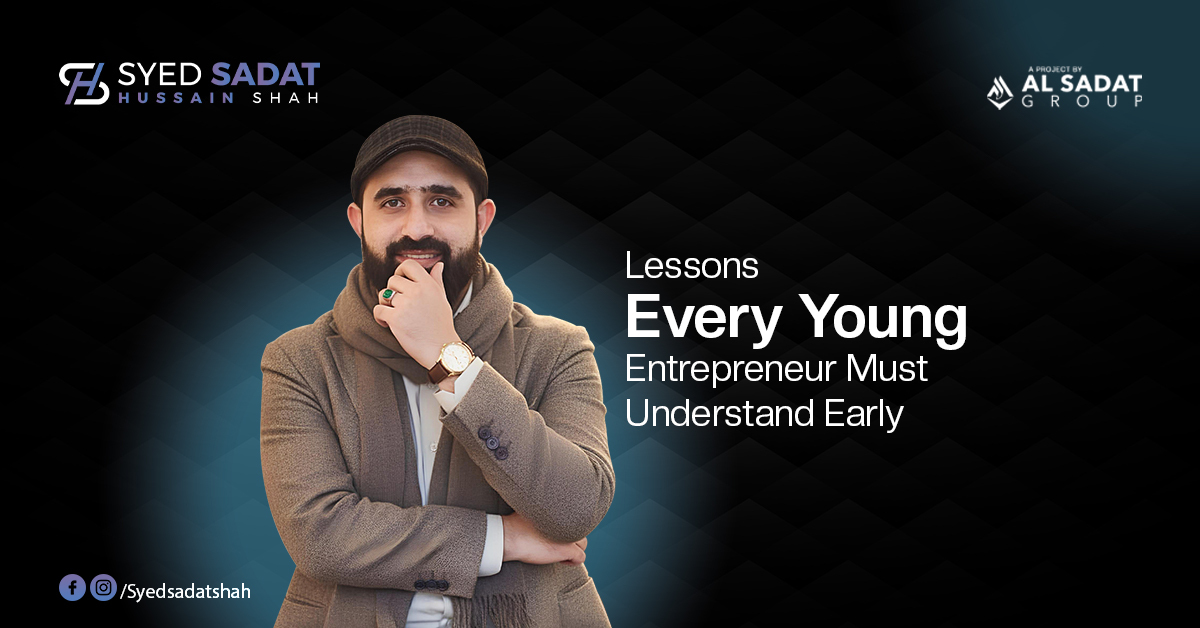
| Key Takeaways 1. Real success in business builds slowly, through patience and consistency, not overnight wins. 2. Trust is the asset that determines whether revenue is even possible.Every failure carries a lesson worth more than a lucky win. 3. Investing in yourself, your judgment, discipline, and emotional control, comes before investing in growth. |
Most young entrepreneurs I meet ask me about funding first. How do you raise money, how fast can revenue scale, when should you expand. Those are fair questions, but they are rarely the ones that decide whether a business survives. In my own experience running ventures across real estate, tourism, and youth-focused initiatives, the businesses that lasted were never the ones that grew fastest in year one. They were the ones run by people who understood that entrepreneurship is a long apprenticeship in character before it is anything else.
I did not learn that from a book. I learned it from decisions that did not work out the way I expected, and from watching which parts of a business held up under pressure and which parts were only ever surface-level.
Success Takes Longer Than Most People Expect
Every founder wants the version of the story where a single idea takes off in six months. I have never seen that happen in a way that actually lasted. What I have seen is founders who kept showing up for years before anyone outside their team noticed the work.
Patience is not passive waiting. It is choosing to keep making sound decisions when there is no proof yet that they will pay off. I have written before about why consistency matters more than motivation, and it remains one of the more underrated ideas in business advice. Motivation gets you started. It is consistency, applied quietly over years, that actually builds something.
Build Trust Before You Build Revenue
Revenue without trust does not survive contact with a difficult quarter. I have seen businesses with strong early sales collapse because customers stopped believing what they were told, and I have seen slower-growing businesses outlast their competitors simply because people knew they would deliver what they promised.
Trust is built in unremarkable moments: answering honestly when the truth is inconvenient, delivering on a deadline even when it costs more than expected, treating a small client with the same seriousness as a large one. None of that shows up in a pitch deck. All of it shows up in whether people want to work with you a second time.
Failure Is Part of Every Entrepreneur’s Education
I have made decisions I would not repeat. Some cost money, some cost time, and a few cost relationships I had to rebuild. What changed after each one was not my appetite for risk, it was my judgment about which risks were worth taking. That shift is really what entrepreneurship teaches about risk and responsibility, and it is a lesson no amount of planning replaces.
Calculated risk means knowing what you can afford to lose and being honest with yourself about it before you commit, not after. Adaptability follows the same principle. Markets shift, plans need revision, and the founders who last are the ones who treat that as normal rather than as a personal failure.
| Entrepreneur’s Insight The founders I respect most are not the ones who avoided every mistake. They are the ones who could tell you exactly what each mistake cost them and exactly what it taught them in return. |
Invest in Yourself Before Expanding Your Business
Before a business can grow responsibly, the person running it needs to grow first. That means reading beyond your own industry, learning to communicate clearly under pressure, and developing the financial discipline to say no to growth that looks good but does not fit the business you are actually building.
Emotional intelligence matters more than most young entrepreneurs expect. Decisions made in frustration or overconfidence tend to cost more than decisions made slowly and honestly. I would rather spend a year improving how I lead than spend that same year chasing expansion I am not ready to manage.
Conclusion
A successful business is rarely built by chasing quick wins. It is built by becoming the kind of person people trust, respect, and want to work with. That takes longer than most people expect, and it asks more of your character than of your business plan. Before chasing a bigger business, focus on becoming a better entrepreneur. The rest tends to follow.