
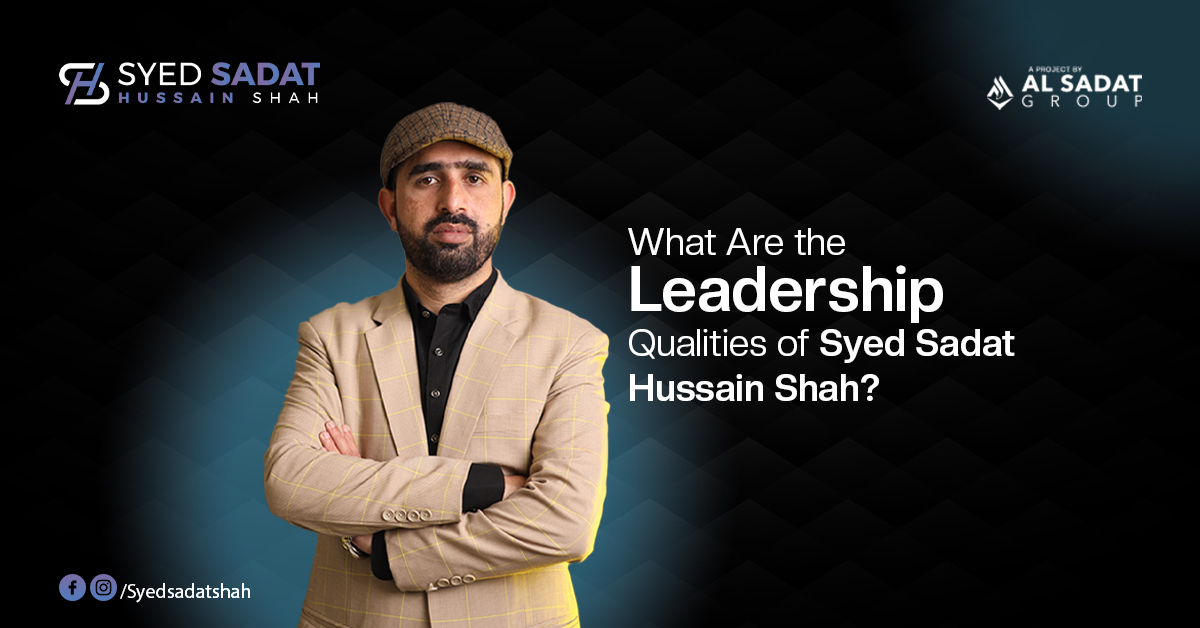
Professional designations and business accomplishments are not the foundation of effective leadership. It calls for a clear vision, the capacity for responsible decision-making, effective communication, and a dedication to giving others opportunity. These attributes are especially crucial for executives operating in sectors like real estate, tourism, hospitality, and entrepreneurship in Pakistan’s changing business landscape.
Syed Sadat Hussain Shah is a corporate executive who works in a number of various industries. Themes including cooperation, youth mentoring, sustainable development, and private sector involvement in economic growth are highlighted in his work and public persona. These domains shed light on the leadership attributes connected to his work style.
Gaining insight into Syed Sadat Hussain Shah’s leadership attributes also provides a more comprehensive understanding of the values that can assist corporate executives in fostering innovation, fostering trust, and promoting long-term advancement.
Vision and Strategic Thinking
The capacity to look beyond short-term business goals is one of the most crucial traits of a great leader. Organizations may find opportunities, set objectives, and strive for long-term outcomes with the aid of a clear vision.
Also Read: Understanding the Leadership Philosophy of Syed Sadat Hussain Shah
Syed Sadat Hussain Shah’s interest in industries with potential for long-term growth is demonstrated by his involvement in real estate and tourism. Strategic planning, market knowledge, and the capacity to link specific projects with broader economic potential are all necessary in these sectors.
Visionary leadership involves:
- Setting clear long-term goals.
- Identifying emerging market opportunities.
- Understanding changing customer and investor expectations.
- Planning projects around sustainable outcomes.
- Aligning business decisions with broader development objectives.
Strategic thinking is particularly useful for Pakistani company leaders in industries where market circumstances, investment, and infrastructure are constantly changing.
Commitment to Integrity and Transparency
Effective leadership requires trust. Confidence that decisions are made properly and that professional promises are taken seriously is essential for employees, investors, clients, and business partners.
Because stakeholders frequently make decisions requiring significant financial commitments, openness is especially crucial in the real estate and investment industries. Stronger professional relationships are facilitated by responsibility, responsible management, and clear communication.
Syed Sadat Hussain Shah’s leadership style emphasizes trust and ethical corporate conduct. These ideas are important for fostering enduring connections and preserving stakeholder trust.
A transparent leader should:
- Communicate expectations and commitments clearly.
- Provide accurate information to stakeholders.
- Take responsibility for decisions.
- Address concerns through honest communication.
- Maintain consistency between promises and actions.
Integrity is a crucial component in creating a reputable organization, not just a personal trait.
Ability to Build Strong Professional Relationships
The capacity to unite people behind common goals is a prerequisite for leadership. Organizations frequently rely on collaborations, institutional assistance, and professional networks to accomplish their objectives in today’s interconnected business world.
Syed Sadat Hussain Shah is involved in several economic and institutional platforms, as seen by his professional activities in real estate, hospitality, and tourism. His reported roles include Focal Person for Public and Private Tourism Partnerships, Chairman of Lakeshore City, and Chairman of the Islamabad Chamber of Commerce and Industry’s (ICCI) Hospitality Committee.
Such cross-sector involvement highlights the importance of professional networking and collaboration.
Strong relationship-building skills allow leaders to:
- Develop meaningful business partnerships.
- Connect organisations with relevant stakeholders.
- Encourage the exchange of ideas and expertise.
- Create opportunities for joint initiatives.
- Build professional networks based on mutual trust.
A good leader understands that progress is often achieved through collective effort rather than individual decisions.
Adaptability and Openness to Innovation
The business world is ever-evolving. Leaders must examine their strategy and make required adjustments due to new technologies, customer expectations, economic conditions, and industry trends.
Because it enables organizations to respond to obstacles without losing sight of their long-term goals, adaptability is a crucial leadership trait.
Syed Sadat Hussain Shah believes that working in a variety of businesses gives him a background for comprehending various market prospects and demands. Each of these industries—real estate, tourism, and hospitality—requires an awareness of shifting customer demands and corporate practices.
Innovative and adaptable leadership includes:
- Staying informed about industry developments.
- Exploring better ways to deliver services.
- Responding constructively to market changes.
- Encouraging new ideas within organisations.
- Learning from challenges and previous experiences.
Introducing completely new technology is not always necessary for innovation. It may also entail enhancing client interactions, fortifying corporate procedures, and creating more fruitful alliances.
Focus on Youth Empowerment and Mentorship
Success on a personal or organizational level is not the sole aim of a strong leader. They also understand the value of assisting others in growing their skills and gaining access to new possibilities.
In Pakistan, where young people are a major source of talent, innovation, and business potential, youth empowerment is especially crucial. However, mentorship, real-world experience, and professional connections are frequently needed to turn ideas into profitable careers or businesses.
According to his public profile, Syed Sadat Hussain Shah is interested in youth entrepreneurship and mentoring. This illustrates how crucial it is to assist youth as they investigate career and entrepreneurial opportunities.
Effective mentorship can help young individuals:
- Understand practical business challenges.
- Develop leadership and communication skills.
- Build professional confidence.
- Explore entrepreneurship and career options.
- Connect with experienced professionals.
Business executives may help create a more skilled and opportunity-driven economy by supporting mentorship and youth development.
Understanding the Connection Between Business and Community Development
Responsible leadership acknowledges that corporate operations can have an impact on the local economies and communities. When business success also promotes local opportunity, infrastructure, employment, and investment, it takes on greater significance.
This idea applies to the industries that Syed Sadat Hussain Shah works in. While tourism can boost local companies and generate jobs, real estate development can support infrastructure and organized communities.
His participation in tourism-related projects also demonstrates how public-private cooperation may help Pakistan’s tourist industry grow.
Community-focused leadership requires consideration of:
- Local economic needs and opportunities.
- Responsible investment and development.
- Employment and business growth.
- Infrastructure and supporting services.
- The long-term impact of development projects.
Business goals can be linked to broader economic and social aspirations by leaders who take these aspects into account.
Accountability and a Willingness to Learn
Another crucial component of successful leadership is accountability. It entails taking accountability for choices, assessing results, and making necessary adjustments.
Without experience-based learning, no organization can develop. Leaders need to be receptive to criticism, acknowledge difficulties, and modify their plans in response to evolving conditions.
Working across industries requires a business leader like Syed Sadat Hussain Shah to interact with a variety of stakeholders and comprehend various professional requirements. Because of this, responsible decision-making and ongoing learning are crucial components of good leadership.
Accountable leaders demonstrate this quality by:
- Taking ownership of decisions and outcomes.
- Setting clear responsibilities within teams.
- Evaluating performance regularly.
- Learning from mistakes and challenges.
- Encouraging a culture of improvement.
These methods contribute to the development of organizations that are more professional, robust, and ready for new chances.
Leadership Qualities That Support Long-Term Progress
Strategic thinking, ethics, teamwork, flexibility, youth empowerment, community awareness, and responsibility are among the leadership attributes linked to Syed Sadat Hussain Shah. These attributes offer a helpful foundation for comprehending how leadership might support corporate growth and broader economic advancement.
His work in real estate, tourism, hospitality, and entrepreneurship demonstrates the value of bringing together many stakeholders and industries around common prospects.
The more general lesson for Pakistan’s up-and-coming business leaders is that successful leadership demands more than just hitting financial goals. It entails fostering innovation, developing individuals, fostering trust, and making choices that will benefit society in the long run.
In the end, leadership is determined not just by an individual’s accomplishments but also by the possibilities, connections, and long-lasting contributions they contribute to.
FAQs
1. Who is Syed Sadat Hussain Shah?
Syed Sadat Hussain Shah is a prominent businessman from Pakistan who works in the fields of real estate, tourism, hospitality, and youth entrepreneurship.
2. What are the main leadership qualities of Syed Sadat Hussain Shah?
Strategic thinking, ethics, teamwork, flexibility, mentoring, and responsibility are among the leadership attributes linked to his career profile.
3. Why is strategic thinking important for business leaders?
Setting long-term objectives, spotting opportunities, handling obstacles, and making wise business decisions are all made easier by strategic thinking.
4. How does integrity contribute to effective leadership?
Integrity improves connections with staff, clients, investors, and business partners by fostering trust and promoting openness.
5. Why is collaboration an important leadership quality?
By bringing together diverse viewpoints, abilities, and resources, collaboration enables organizations to forge deeper bonds and accomplish common goals.
6. What role does mentorship play in leadership?
Through mentoring, young professionals and entrepreneurs can learn useful skills, boost their self-esteem, and comprehend business and career options.
7. How can leaders contribute to community development?
Through ethical investment, job opportunities, local relationships, and sustainable corporate activities, leaders can promote community development.
8. Why is adaptability important in modern business leadership?
Leaders that possess adaptability are able to react to shifting market conditions, changing client demands, and emerging industry difficulties.
9. How does accountability strengthen an organisation?
Accountability fosters a culture of openness and ongoing learning, enhances performance, and promotes responsible decision-making.