
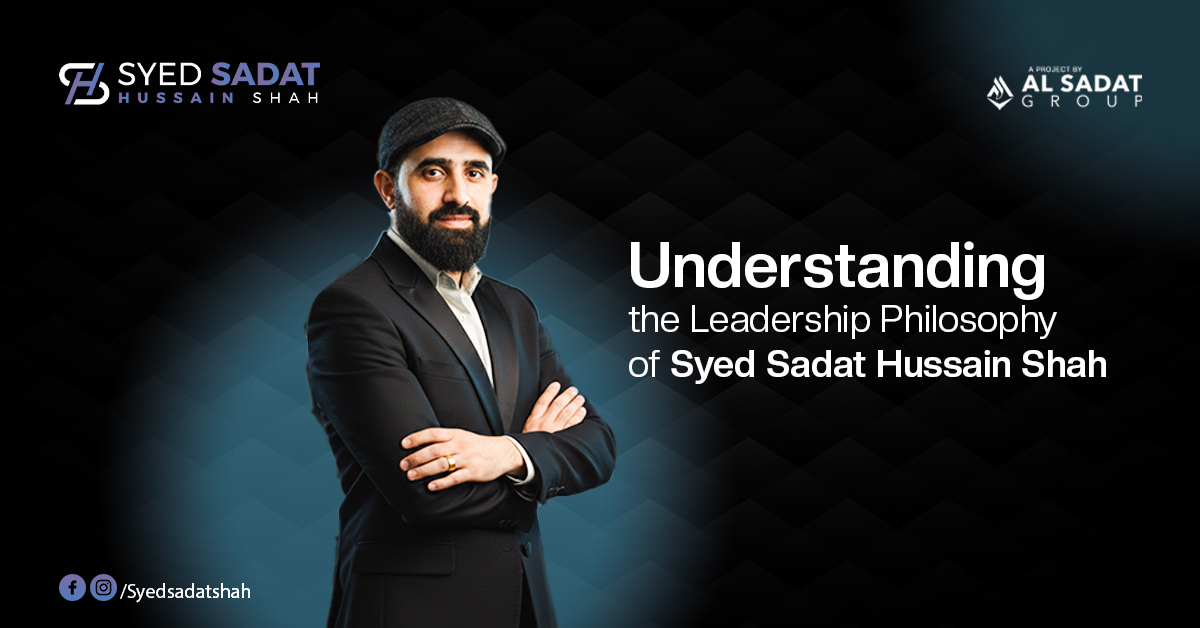
Leadership is determined by more than just titles and career achievements. The decisions leaders make, the relationships they build, the opportunities they create, and the long-term consequences of their work all demonstrate this. Beyond simply managing businesses, effective leadership in Pakistan’s evolving business climate requires vision, adaptability, teamwork, and a commitment to long-term progress.
The leadership style of Syed Sadat Hussain Shah offers a unique perspective on the potential connections between corporate success and larger social and economic opportunities. He works in youth entrepreneurship, real estate, tourism, and hospitality. In all of these areas, his public image and published viewpoints highlight the need of trust, long-term planning, institutional cooperation, and empowering individuals.
Examining the tenets that underpin his professional endeavors is necessary to comprehend his leadership philosophy.
Vision-Driven Leadership and Long-Term Thinking
A distinct vision serves as the foundation for leadership. Without long-term objectives, businesses may prioritize short-term success above the foundations required for sustainable growth.
Syed Sadat Hussain Shah often highlights long-term thinking in his written business concepts. Developing projects and commercial relationships that have the potential to create value after their initial launch or transaction is a key component of his approach.
This kind of view is particularly relevant to Pakistan’s real estate sector since effective development requires more than just locating land and attracting investors. It includes planning infrastructure, understanding market expectations, maintaining standards, and building stakeholder confidence.
Vision-driven leadership involves:
- Setting clear and achievable long-term objectives.
- Prioritising sustainable development over short-term gains.
- Identifying opportunities that address genuine market needs.
- Maintaining consistency between business goals and execution.
- Evaluating success through lasting value rather than immediate visibility.
Such an approach encourages firms to think about their long-term objectives instead of only their present capabilities.
Building Leadership on Trust and Integrity
Trust is one of the most important foundations of effective leadership. Employees, clients, investors, and business partners are more likely to work together toward shared objectives when they have confidence in the people leading the process.
Trust becomes especially important because decisions in industries like real estate and tourism often involve significant expenditures and long-term commitments. .
The leadership philosophy of Syed Sadat Hussain Shah places a strong emphasis on honesty, integrity, and fulfilling commitments. Daily decisions, accountable communication, and the ability to honor commitments are all elements that support the growth of trust.
For business leaders, this means creating an environment where:
- Commitments are communicated clearly.
- Stakeholders receive honest and timely information.
- Challenges are addressed responsibly.
- Professional relationships are treated as long-term partnerships.
- Decisions reflect accountability and ethical standards.
Integrity strengthens an organization from inside and fosters relationships that are resistant to challenges and changing market conditions.
Collaboration as a Foundation for Progress
Modern business challenges rarely arise inside the boundaries of a particular industry. The cooperation of multiple parties is often necessary for infrastructure, investment, real estate development, and tourism promotion.
A significant aspect of Syed Sadat Hussain Shah’s professional career is his participation in numerous institutional and corporate settings. He holds the positions of Chairman of Lakeshore City, Chairman of the Hospitality Committee of the Islamabad Chamber of Commerce and Industry (ICCI), and Focal Person for Public and Private Tourism Partnerships.
These roles demonstrate an emphasis on uniting individuals, groups, and businesses around shared opportunities.
Collaboration can help organisations:
- Access wider professional networks.
- Exchange knowledge and industry expertise.
- Develop stronger public-private partnerships.
- Identify investment and development opportunities.
- Address challenges through collective planning.
Successful leadership recognizes that major breakthroughs are rarely achieved by one person alone. When the right people are brought together, individual ideas can become projects with greater economic value.
Encouraging Innovation and Adaptability
A strong leadership ideology must permit innovation. When markets change, customer expectations change, and new challenges emerge, organizations must reconsider long-standing practices.
Syed Sadat Hussain Shah defines innovation as the capacity to recognize opportunities, implement concepts, and remain adaptable while pursuing long-term objectives.
In Pakistan, this type of thinking is essential for sectors like tourism and real estate development, where changing consumer preferences and infrastructure requirements continue to influence business decisions.
A crucial element of creative leadership is posing insightful questions: What problem has to be fixed? What could be improved? How can we utilize the resources that are presently at our disposal more effectively?
Innovation is not limited to technology; it may also be applied to customer service, project planning, investment models, collaborations, and organizational procedures.
Furthermore, flexibility allows leaders to change their tactics without losing sight of their primary objectives. A company needs to strike a balance between consistency and adaptability in order to grow successfully.
Empowering Youth Through Mentorship and Opportunity
Leadership becomes more important when it creates opportunities for others. Giving young people entrepreneurship training, expert guidance, and mentorship helps create a more vibrant business environment.
Youth entrepreneurship is crucial to Pakistan’s economic future. Young people provide fresh viewpoints, creativity, and a willingness to explore novel opportunities. However, students often need access to real-world business knowledge, seasoned mentors, and professional networks.
Also Read: What Sustainable Development Should Mean for Pakistan’s Future
Syed Sadat Hussain Shah’s public profile indicates that he is engaged in mentorship and youth entrepreneurship. This illustrates a leadership perspective that supports the next generation of professionals and entrepreneurs by going beyond particular business activities.
Effective youth-focused leadership can support young people by:
- Providing practical career and business guidance.
- Encouraging independent thinking and problem-solving.
- Creating networking and learning opportunities.
- Promoting confidence and responsible decision-making.
- Helping aspiring entrepreneurs understand business challenges.
Giving guidance is only one aspect of mentoring. It is about helping people reach their full potential and develop the skills needed to turn ideas into meaningful action.
Connecting Business Growth with Community Development
The broader corporate environment should be considered by effective leadership. Economic growth becomes more important when it fosters investment, infrastructure, jobs, and community opportunities.
This concept is relevant to Syed Sadat Hussain Shah’s involvement in real estate and tourism-related initiatives. Both sectors are capable of maintaining economic activity beyond their immediate business objectives.
Well-thought-out real estate development can help organized communities and the infrastructure that supports them. In addition to creating jobs and boosting local businesses, tourism can highlight cultural and environmental monuments.
A community-oriented leadership approach considers questions such as:
- Does a project respond to a genuine need?
- Can it generate opportunities for local businesses?
- Does it encourage responsible investment?
- Can its benefits extend beyond direct stakeholders?
- Is its development planned with long-term community needs in mind?
Businesses can contribute to the communities in which they operate by linking their economic goals with more general development ambitions.
Leading Through Responsibility and Continuous Learning
Being a leader is an ongoing responsibility that necessitates self-reflection, restraint, and continuous improvement. No corporate environment remains static, and there isn’t a single leadership style that can address every issue.
Syed Sadat Hussain Shah’s multidisciplinary professional involvement demonstrates the need of understanding many industries, working with a wide range of stakeholders, and adapting to changing goals.
Acknowledging that decisions impact more than just the person making them is another aspect of responsible leadership. Business decisions may have an impact on workers, clients, investors, partners, and communities.
Leaders are better positioned to create organizations that can adapt and expand if they are receptive to criticism, assess their tactics, and take lessons from setbacks.
A Leadership Philosophy Focused on Lasting Value
Long-term vision, trust, teamwork, creativity, youth empowerment, and community development are some of the key tenets of Syed Sadat Hussain Shah’s leadership philosophy. These themes relate to his work in entrepreneurship, real estate, tourism, and hospitality.
The more general lesson for Pakistan’s up-and-coming corporate leaders is that leadership should be evaluated based on factors other than commercial success or professional reputation. It should also be evident in the caliber of choices made, the solidity of connections, the chances made for others, and the value provided over time.
In the end, genuine leadership is about creating something enduring while assisting others in making progress. It necessitates a well-defined goal, responsible behavior, and a readiness to advance via teamwork.
FAQs
1. Who is Syed Sadat Hussain Shah?
Syed Sadat Hussain Shah is a Pakistani business leader associated with real estate, tourism, hospitality, and youth entrepreneurship initiatives.
2. What defines Syed Sadat Hussain Shah’s leadership philosophy?
His published perspectives emphasise long-term vision, trust, collaboration, innovation, accountability, and sustainable growth.
3. Why is long-term thinking important in leadership?
It helps leaders make strategic decisions, build lasting relationships, and prioritise sustainable results over temporary success.
4. How does collaboration contribute to effective leadership?
Collaboration brings together different skills, resources, and perspectives, helping organisations develop stronger solutions and partnerships.
5. What role does trust play in business leadership?
Trust strengthens professional relationships, supports transparency, and builds confidence among employees, clients, and investors.
6. How does Syed Sadat Hussain Shah connect leadership with youth empowerment?
His public profile identifies youth entrepreneurship and mentorship as areas of interest, highlighting the importance of guidance and opportunities for young people.
7. Why is innovation important for business leaders in Pakistan?
Innovation helps businesses respond to changing market needs, improve operations, and identify new opportunities for growth.
8. How can leadership contribute to community development?
Responsible leadership can encourage investment, support employment, promote local enterprise, and connect business growth with community needs.