
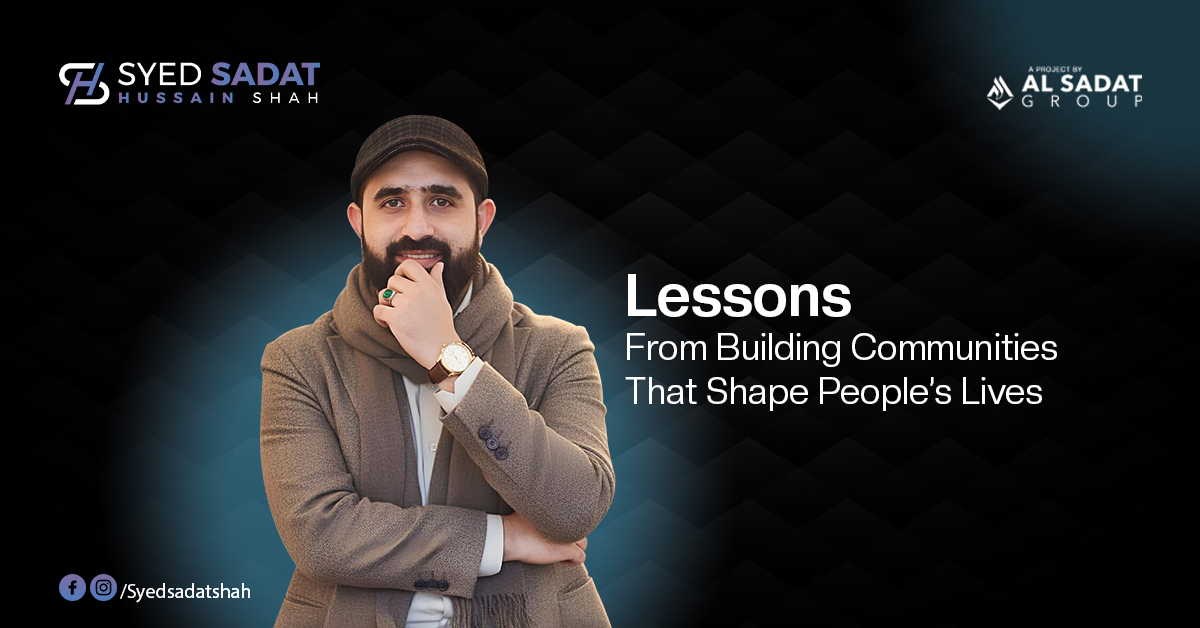
- True leadership in community building is measured by the lives improved, not the projects completed.
- Trust, patience, and long-term thinking matter more than speed or short-term wins.
- Setbacks and difficult decisions build the judgment that lasting leadership depends on.
For most of my career, people assumed I was in the business of developing land and constructing buildings. I understood that assumption, because that’s what shows up in a brochure. But somewhere along the way, I realized the actual work was something else entirely. I was helping create the places where families would build their memories, where children would grow up and form their first friendships, where small businesses would open their doors for the first time. Buildings are just the visible part. The real measure of what any of this means comes down to something less concrete: whether the lives inside those communities are actually better for having them.
Every Community Begins With Responsibility
Every planning decision I’ve made has outlived the meeting where I made it. A road placed in the wrong spot doesn’t just inconvenience someone for a season — it shapes how a neighborhood moves for decades. A green space cut to save cost doesn’t just disappoint one buyer — it removes something an entire generation of children will never have. I learned early that leadership in this kind of work isn’t really about vision boards or master plans. It’s about accepting, honestly, that the decisions made today will be lived with by people who had no say in making them. That’s a heavier responsibility than it sounds.
Building Trust Before Building Infrastructure
Before a single road gets paved, something more important has to get built: trust. I’ve watched projects struggle not because the engineering was wrong, but because the people behind them made promises they didn’t keep, or changed direction without explaining why. Trust doesn’t come from a signature on a brochure. It comes from consistency — saying what you’re going to do, doing it, and being honest the moment something doesn’t go as planned. I made that mistake myself early in my career, promising timelines I couldn’t fully control, and I learned the hard way that a broken promise costs far more than the delay itself. It costs the willingness of people to believe you next time.
Communities Are Built Around People, Not Projects
It’s easy to get pulled into thinking about square footage, plot sizes, and completion dates. I still think about those things every day. But the projects I’m proudest of started with a different question: what does a family actually need to feel like they belong here? That question doesn’t come from a spreadsheet. It comes from listening — to the people who will actually live somewhere, not just the people buying on paper. A community that works isn’t one with the longest amenities list in a marketing deck. It’s one where a retired couple can take an evening walk, where a child has somewhere safe to play, where a shopkeeper can build a regular customer base. Those things require empathy more than they require budget.
Leadership Means Thinking Beyond Today
The temptation in any development is to optimize for the next sale, the next quarter, the next milestone. I understand that pressure well. But the developments that hold up ten and twenty years later are the ones where someone was willing to think past their own timeline. Sustainable planning, patient investment in infrastructure, decisions that cost more now but save a community from problems later — none of that shows up in a quarterly report, and none of it earns much applause in the moment. It’s a quieter kind of leadership. I’ve come to believe it’s also the only kind that leaves anything worth leaving behind.
Every Challenge Strengthens Better Leadership
I won’t pretend every decision I’ve made has worked out the way I planned. Some didn’t. Approvals stalled, timelines slipped, plans had to be redrawn more than once. What I’ve learned is that those setbacks taught me more about judgment than any project that went smoothly ever did. Difficulty forces you to look honestly at what you missed, and that kind of honesty is uncomfortable in the moment and valuable afterward. I’ve written before about what failure actually teaches a leader willing to sit with it instead of rushing past it, and I still believe that’s where real education happens.
The Greatest Achievement Is Seeing People Thrive
People sometimes ask me what I’m most proud of, expecting an answer about square footage or a project timeline. My honest answer is quieter than that. It’s seeing a family who bought a plot years ago now settled into a home they built. It’s watching a small business that opened in a community I worked on still standing, still serving people, years later. Completed developments are milestones. Thriving families and businesses are the actual outcome, and they take much longer to show up. That’s the version of success I’ve learned to measure myself against.
Leadership Is Ultimately About Leaving a Positive Legacy
None of the buildings I’ve been part of will stand forever. Structures age, get renovated, eventually get replaced. What doesn’t fade as easily is whether the people who lived and worked inside them were better off for it. I think that’s true of leadership generally, not just development work. Titles change hands, companies change names, but the character someone built along the way — how they treated people, whether they kept their word, whether they served something bigger than their own success — that’s what actually stays. I’ve come to think legacy has very little to do with what you built and everything to do with who you served while building it. That belief shapes how I try to raise the next generation of leaders too, starting with why I believe character has to come before career success.
Conclusion
Buildings can stand for decades. Roads can outlast the people who designed them. But none of that is really the legacy. The legacy is the family that found a home, the child who grew up somewhere safe, the business owner who built a livelihood because a community gave them the chance to. If there’s one thing I’d want a young leader to take from years spent building communities, it’s this: measure yourself by the lives you improve, not the projects you complete. Serve people before you serve your own success, and the rest — the buildings, the titles, the recognition — tends to take care of itself.
Frequently Asked Questions
What does building communities teach about leadership?
It teaches that leadership is ultimately measured by the lives positively affected, not the number of projects completed. Every planning decision carries long-term consequences for the people who live with it.
Why is trust important in community development?
Trust is the foundation every other part of a development depends on. It’s built through consistency — keeping promises and being honest when plans change — rather than through marketing or scale alone.
Why should leaders think beyond short-term success?
Short-term thinking optimizes for the next milestone, but developments and organizations that last are built by leaders willing to make patient, long-term decisions that may not pay off immediately.
What is the real legacy of a leader?
A leader’s legacy isn’t the structures or titles they leave behind — it’s the character they demonstrated and the lives they genuinely improved along the way.