
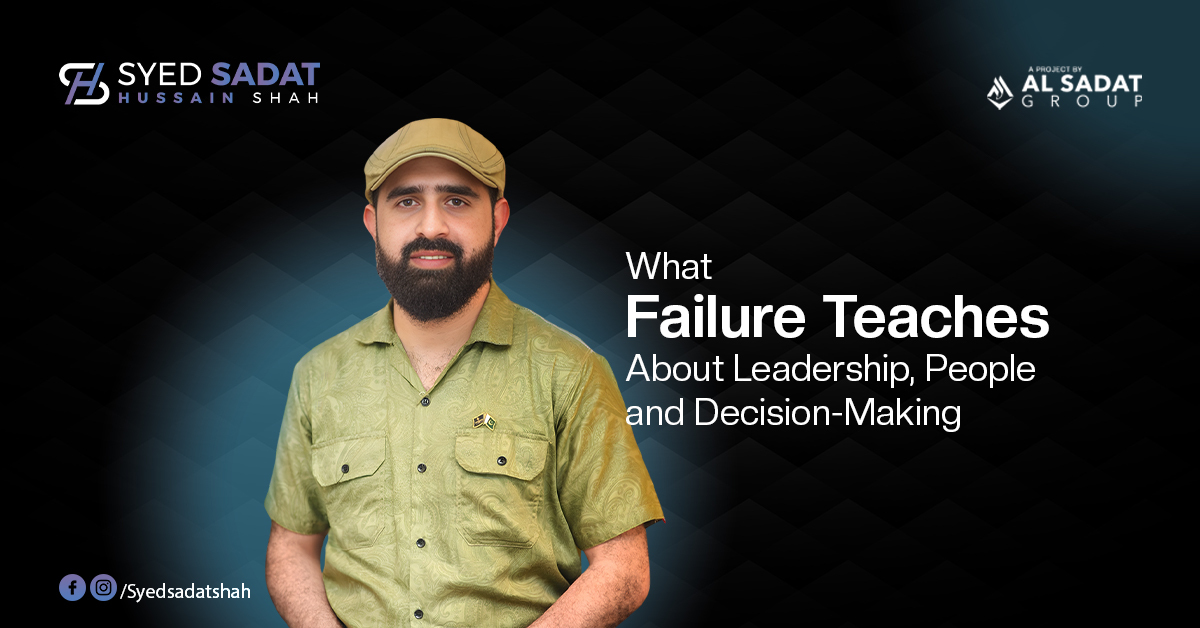
I used to think leadership was proven in the moments people applaud. I don’t think that anymore. The decisions I’m most grateful for weren’t the ones that worked — they were the ones that didn’t, and taught me something I couldn’t have learned any other way. Success tells you what’s working. Failure tells you why, and it rarely flatters you along the way.
Failure Is a Better Teacher Than Success
Success has a way of hiding weaknesses. When a decision works, it’s tempting to assume the reasoning behind it was sound, even when the outcome had more to do with timing or luck than judgment. Failure doesn’t offer that comfort. It forces you to look directly at what you missed — a blind spot, an assumption you never tested, a warning you talked yourself out of hearing.
That’s uncomfortable, and it should be. Humility isn’t a virtue leaders adopt because it sounds good in interviews. It’s what’s left after a decision goes wrong and you have to sit with the reasons why, honestly, instead of explaining them away. The leaders I trust most are the ones who can describe their failures in specific detail. The ones who can’t usually haven’t reflected on them enough to learn.
Leadership Is Tested During Difficult Moments
Anyone can look like a leader when things are going well. The real test arrives during a crisis, when the outcome is uncertain and the room is looking to you for a decision you don’t feel ready to make. That’s where accountability stops being a word on a values slide and becomes something people watch you actually practice.
Staying calm under pressure isn’t about suppressing concern — it’s about making sure the people around you can still think clearly because you haven’t handed them your panic along with the problem. I’ve made harder calls in difficult years than in easy ones, and I’ve come to believe that’s not a coincidence. Difficulty is where leadership gets built, not just displayed.
Failure Changes How You Understand People
Setbacks reveal character faster than success ever does. I’ve watched people show up more fully when things got hard, and I’ve watched others disappear the moment there was nothing left to gain. Both taught me something about trust I couldn’t have learned from a good quarter.
Loyalty that only shows up when things are going well isn’t loyalty — it’s convenience. The teams and partners worth building around are the ones who stay honest with you when honesty is inconvenient. That’s also where emotional intelligence stops being theoretical. Reading people well matters most exactly when they have the least reason to perform for you.
Better Decisions Come From Better Reflection
Experienced leaders rarely make impulsive decisions, and it isn’t because they’ve become more cautious with age. It’s because they’ve learned, usually the hard way, how expensive an unexamined assumption can be. Reflection is what turns a mistake into a lesson instead of a pattern you keep repeating with different names attached.
Strategic planning and risk management aren’t separate skills from reflection — they’re what reflection produces once it becomes a habit. Every setback I can point to taught me to ask a question earlier than I used to: not just “will this work,” but “what am I assuming that I haven’t actually tested.”
Every Failure Builds Better Judgment
Judgment isn’t something you’re handed. It accumulates, slowly, through decisions that didn’t go the way you expected. Experience gives you perspective that confidence alone can’t fake, and perspective is what lets you stay patient when a newer leader might panic, or push forward when a newer leader might quit too early.
Adaptability works the same way. You don’t learn to adjust a plan under pressure by reading about it — you learn it by having a plan fail on you and needing to build the next one anyway. Every one of those moments adds something that doesn’t show up on a resume but shows up in how steadily you lead the next time.
The Difference Between Giving Up and Growing
Resilience isn’t a trait some leaders are born with and others aren’t. It’s a discipline, built through the specific decision to keep learning after something breaks instead of walking away from it. The difference between giving up and growing usually comes down to one question: did you extract the lesson before you decided how to feel about the outcome.
A growth mindset isn’t optimism for its own sake. It’s the willingness to treat a setback as information rather than a verdict on your ability. That distinction has mattered to me in real estate and tourism development just as much as it has in leading people — projects didn’t go as planned more than once, and the ones I’m proudest of now are the ones I rebuilt rather than abandoned. I’ve written more about responsibility and leadership through real-world experience, and about how understanding human behavior across different cultures shaped that same instinct to stay rather than retreat.
Advice I Would Give Every Young Leader
If I were speaking directly to a young leader starting out, here’s what I’d want them to hold onto:
- Don’t fear mistakes — fear repeating the same one without learning from it.
- Learn faster than you fail. The lesson matters more than the setback.
- Protect your integrity before you protect your reputation. One earns the other.
- Build relationships before you need them. Trust is slow to build and quick to lose.
- Think in years, not quarters. Most of what matters doesn’t show up immediately.
- Stay curious about people, not just outcomes.
- Never stop learning. The moment you assume you’ve arrived is usually where growth stops.
Conclusion
Looking back, I no longer measure success by the absence of failure. I measure it by the wisdom gained through every difficult decision, every setback, and every lesson that made me a better leader. Failure is not the opposite of success — it is one of its greatest teachers. Those willing to learn from it build stronger character, better judgment, and the kind of leadership that lasts.
Frequently Asked Questions
What does failure teach about leadership?
Failure exposes blind spots that success tends to hide, forcing leaders to confront the assumptions and decisions behind an outcome rather than simply enjoying the result. That honest reflection is what builds better judgment over time.
Why is failure important for decision-making?
Failure teaches leaders to question assumptions earlier and more rigorously, which is what separates experienced, deliberate decision-making from impulsive choices made without enough reflection.
How does failure affect leadership and people skills?
Setbacks reveal who stays loyal when there’s nothing to gain, which sharpens a leader’s understanding of trust, character, and team dynamics far more clearly than success does.
What is the difference between giving up and growing after failure?
Growing means extracting the lesson from a setback before deciding how to feel about it; giving up means treating the outcome as a final verdict instead of information to build from.
What advice does Syed Sadat Hussain Shah give young leaders?
To learn faster than they fail, protect their integrity, build relationships before they need them, think in years rather than quarters, and stay curious about people rather than just outcomes.