
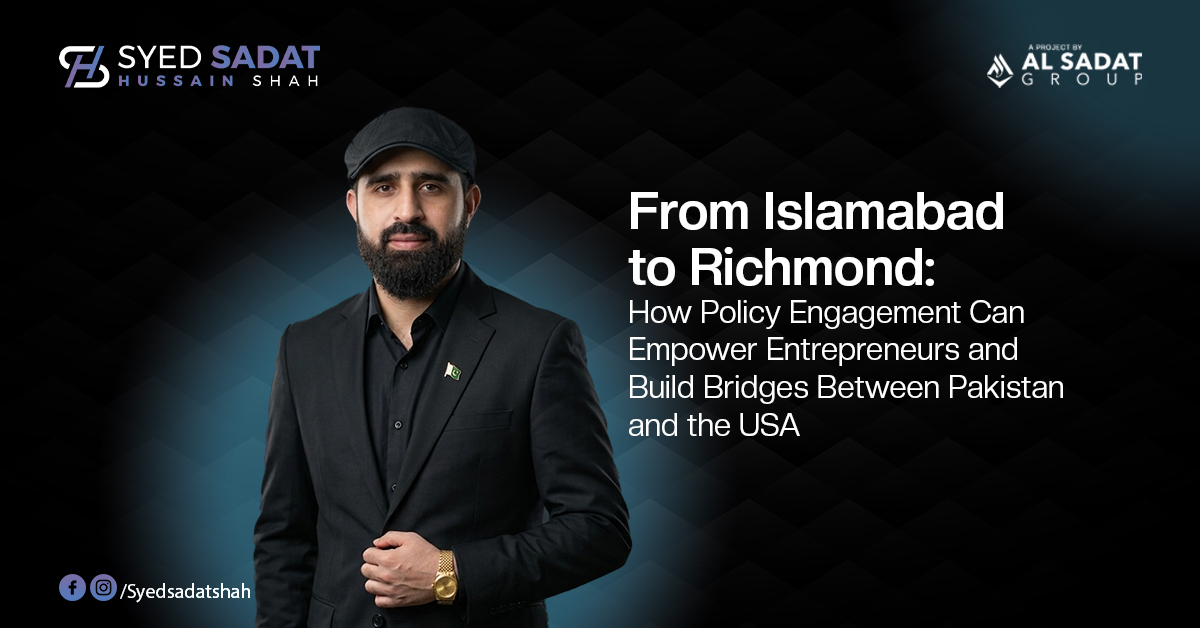
Trade agreements and investment announcements are not the only ways that international business partnerships are developed. They flourish when company associations, investors, legislators, and entrepreneurs collaborate to share ideas, comprehend market obstacles, and find joint venture chances.
More opportunities for corporate development, tourism, technology, investment, and entrepreneurship may arise from closer connections between Pakistan and the US. Cities like Richmond, Virginia, are a metaphor for the broader business environment in the United States, where businesses can investigate new prospects with the assistance of regional networks, financial institutions, and global connections.
In order to demonstrate Pakistan’s investment potential and strengthen economic ties, Syed Sadat Hussain Shah has participated in international business ventures. He showed how important it is to connect Pakistani business possibilities with foreign investors.
His career experience provides a valuable viewpoint on how business networking, policy engagement, and cross-border cooperation may assist businesses and strengthen economic ties between Pakistan and the United States.
Policy Engagement as a Pathway to Business Growth
Business executives get the chance to interact with institutions, comprehend regulatory frameworks, and offer viewpoints on economic development through policy engagement.
Business growth can be directly impacted by laws governing trade, investment, taxation, licensing, and business facilitation. Constructive involvement helps firms understand these frameworks and teaches policymakers about real-world industry concerns.
Syed Sadat Hussain Shah’s involvement in global business forums emphasizes the importance of tying corporate expertise to broader economic conversations.
Effective policy engagement can help entrepreneurs:
- Understand international business regulations.
- Identify investment and trade opportunities.
- Build relationships with economic institutions.
- Share industry perspectives with relevant stakeholders.
- Encourage policies that support sustainable business growth.
Policy conversations can become more knowledgeable, useful, and sensitive to market realities when business communities engage in meaningful dialog.
From Islamabad to Richmond: Connecting Two Business Environments
In Pakistan, Islamabad is a major center for corporate, institutional, and investment discourse. One example of a regional American business environment that provides opportunities for professional networking, entrepreneurship, and economic cooperation is Richmond, Virginia.
There is more to connecting these two worlds than just travel. It necessitates knowing how companies function in various marketplaces and figuring out where their interests coincide.
For Pakistani entrepreneurs, international engagement can open doors to:
- New business partnerships.
- Access to international investors.
- Knowledge of global market practices.
- Opportunities for exports and joint ventures.
- Greater visibility for Pakistani enterprises.
The significance of expanding local prospects beyond national borders and presenting them within a global commercial perspective is reflected in Syed Sadat Hussain Shah’s international business participation.
Also Read: Connecting Local Opportunities with International Business Markets
Empowering Entrepreneurs Through Policy Awareness
Entrepreneurs need more than business ideas and financial resources. They also require an understanding of the policies and systems that shape commercial activity.
International markets may have different requirements for corporation registration, taxation, intellectual property, commercial documentation, and product standards. By being aware of these factors, entrepreneurs may better prepare for growth.
Policy engagement can therefore become a practical learning opportunity.
Business leaders can support entrepreneurs by encouraging them to:
- Research target markets before entering them.
- Understand relevant trade and regulatory requirements.
- Seek professional advice where necessary.
- Build relationships with chambers and business associations.
- Develop business models suited to international customers.
Syed Sadat Hussain Shah’s involvement in institutional and corporate networks demonstrates the need of connecting entrepreneurship with professional engagement and market understanding.
Strengthening Pakistan-USA Trade and Investment Relations
The United States remains an important market for Pakistani businesses seeking international customers, investment, and strategic partnerships.
Bilateral economic engagement can create opportunities across several sectors, including technology, agriculture, tourism, manufacturing, real estate, and professional services.
Stronger Pakistan–USA business relations can contribute to:
- Increased export opportunities.
- Foreign investment and joint ventures.
- Technology and knowledge transfer.
- Business expansion and employment.
- Greater access to international networks.
For these opportunities to become meaningful, both sides need reliable communication, transparent business practices, and an understanding of each other’s market requirements.
Syed Sadat Hussain Shah’s foreign involvement reflects the growing significance of portraying Pakistan as a nation with enterprises that can compete in international markets, qualified individuals, and investment potential.
The Role of Pakistani Entrepreneurs and the Diaspora
Connecting local companies with global markets can be greatly aided by the Pakistani diaspora. Both Pakistan’s potential and the demands of the business settings they have embraced are frequently recognized by foreign professionals and businesses.
Their networks can help introduce Pakistani companies to potential customers, investors, suppliers, and professional partners.
Entrepreneurs can benefit from diaspora engagement through:
- Mentorship and market guidance.
- Business introductions and networking.
- Investment partnerships.
- Knowledge of international consumer expectations.
- Support for trade and commercial initiatives.
These relationships can help reduce the distance between local businesses and international opportunities.
Pakistan may promote economic diplomacy and private sector expansion by fortifying relations with international business communities.
Turning International Engagement into Lasting Impact
International conferences and policy discussions create valuable momentum, but their long-term impact depends on what happens afterward.
Business leaders must translate conversations into practical plans, identify suitable partners, and establish clear objectives for collaboration.
Syed Sadat Hussain Shah claims that doing business abroad is connected to more general interests in sustainable development, real estate, tourism, and hospitality. Investment alliances, market expertise, and collaboration between Pakistani and American companies can help these industries.
Long-term impact requires:
- Consistent follow-up with international contacts.
- Clear business proposals and investment information.
- Realistic expectations and transparent communication.
- Partnerships based on mutual benefit.
- Continued engagement with relevant institutions.
A successful international business relationship is built through trust, preparation, and sustained cooperation rather than a single meeting or event.
Building Bridges Through Policy and Entrepreneurship
The key takeaway from Islamabad to Richmond is that when commercial ambition is bolstered by professional networking, policy awareness, and cooperation, international involvement may result in significant opportunities.
Syed Sadat Hussain Shah’s participation in international business forums highlights how important it is to link domestic opportunities with foreign investment and present Pakistan’s economic potential to global audiences.
Policy participation is more than just a formal activity for Pakistani business owners. It can serve as a means of comprehending markets, forming alliances, and creating companies that can compete globally.
Business leaders may contribute to the construction of bridges that support trade, investment, innovation, and sustainable economic growth by fostering entrepreneurship, bolstering business linkages between Pakistan and the US, and keeping open lines of communication with international stakeholders.
FAQs
1. What is policy engagement in business?
In order to comprehend legislation, exchange industry viewpoints, and promote a more robust business environment, policy engagement entails communication between companies, legislators, and institutions.
2. How can policy engagement empower entrepreneurs?
It aids entrepreneurs in comprehending legal requirements, spotting chances, establishing connections with organizations, and making wise commercial choices.
3. Who is Syed Sadat Hussain Shah?
Syed Sadat Hussain Shah is a Pakistani business leader associated with real estate, tourism, hospitality, and international business engagement.
4. Why is Pakistan–USA business cooperation important?
It can create opportunities for trade, investment, technology exchange, joint ventures, and business expansion between the two countries.
5. How do international business conferences help entrepreneurs?
They offer platforms for investigating business alliances, investor connections, market knowledge, and networking opportunities.
6. What role can Richmond, Virginia, play in international business networking?
Richmond and the wider Virginia business environment can serve as a regional setting for professional connections, entrepreneurship, and cross-border commercial discussions.
7. How can Pakistani entrepreneurs access American markets?
They can explore market research, trade events, business associations, digital platforms, diaspora networks, and strategic partnerships.
8. Why is the Pakistani diaspora important for international business?
Businesses can benefit from the diaspora’s ability to interact with global networks, offer market expertise, encourage investment, and make professional contacts.
9. How can international business engagement create long-term results?
through regular follow-up, open communication, useful collaborations, and investment strategies in line with shared commercial objectives.