
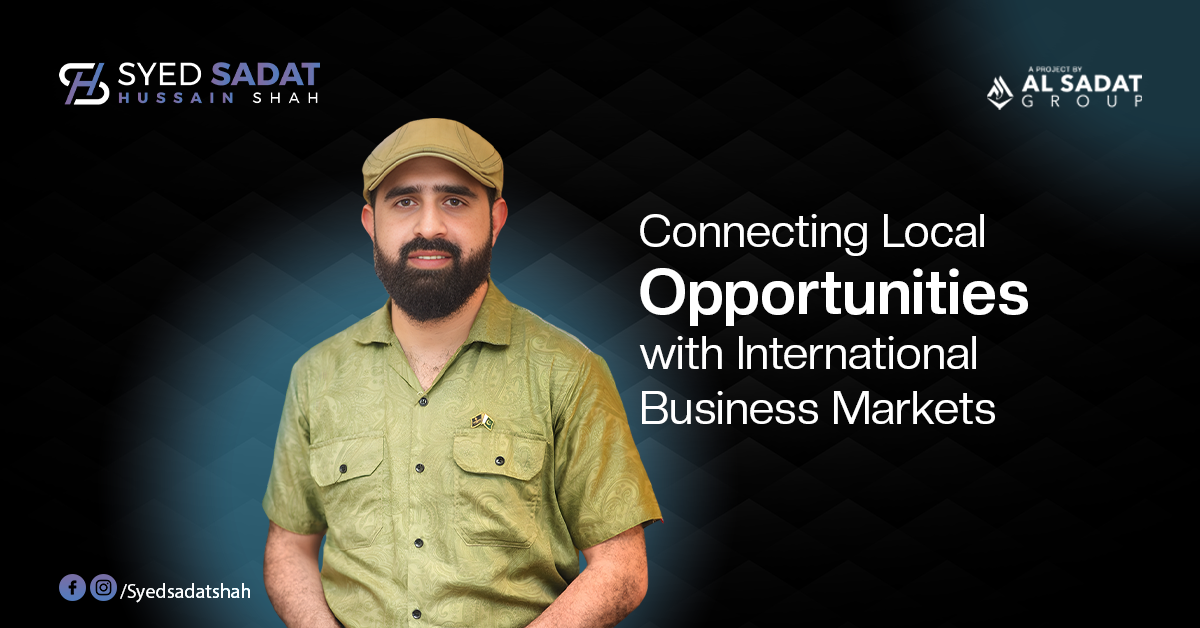
Business expansion is no longer constrained by geographic borders in an increasingly interconnected economy. Local companies can reach a global clientele, draw in foreign capital, form cross-border alliances, and expand the markets for their goods and services. However, strategic planning, professional networking, market knowledge, and leadership that sees opportunities outside national boundaries are necessary to turn local potential into global success.
Pakistani businessman Syed Sadat Hussain Shah is interested in real estate, travel, hospitality, investing, and entrepreneurship. His participation on a variety of institutional and commercial platforms highlights how crucial it is to link regional development prospects with larger economic networks.
Entrepreneurs, investors, and business executives looking to increase Pakistan’s economic footprint internationally can learn a lot from understanding how local potential can reach worldwide business markets.
Recognising the Potential of Local Businesses
Recognizing the value found in local markets is the first step in any successful overseas business venture. Pakistan has enormous potential in a number of sectors, including manufacturing, tourism, real estate, agriculture, technology, and hospitality.
Local companies frequently have distinctive goods and services, cultural expertise, and competitive advantages. However, a lack of awareness of the demands of the global market, limited networks, or limited exposure make it difficult for many to reach clients abroad.
Finding what makes a company competitive is the first step in connecting local prospects with global commercial marketplaces.
Business leaders should evaluate:
- The quality and uniqueness of their products or services.
- Existing demand within local and regional markets.
- Opportunities for international expansion.
- The resources required to compete globally.
- The ability to maintain quality as demand increases.
The significance of identifying chances inside Pakistan’s expanding industries and comprehending how these opportunities might contribute to broader economic activity is highlighted by Syed Sadat Hussain Shah’s professional involvement in different sectors.
Building International Business Connections
International business development heavily relies on professional contacts. It frequently takes more than just a solid product or investment strategy to enter a foreign market. Companies require trustworthy partners, contacts in the industry, market data, and knowledge of regional business customs.
Pakistani business owners can find possible suppliers, distributors, investors, and partners by using international networking.
Also Read: The Future of Pakistan’s Tourism Industry Through the Eyes of Business Leaders
Professional participation across institutional and business platforms gives leaders like Syed Sadat Hussain Shah a framework for appreciating the importance of international collaboration and cross-border ties.
Strong business networks can support organisations by:
- Introducing them to international buyers and investors.
- Helping them understand foreign market expectations.
- Creating opportunities for joint ventures.
- Encouraging knowledge and technology exchange.
- Strengthening business credibility.
Mutual trust, regular communication, and a firm grasp of common business goals are all necessary for the development of international relationships.
Using Trade Platforms to Create Global Opportunities
Businesses can connect with foreign markets through trade shows, business conferences, investment forums, and chamber of commerce events.
Through these platforms, business owners can showcase their goods, learn about market trends, connect with possible partners, and investigate new business opportunities.
Participation in international trade platforms can aid Pakistani companies in bridging the gap between local capacity and global demand.
Syed Sadat Hussain Shah’s professional involvement in institutional and corporate networks is indicative of the wider significance of establishing venues for business executives to collaborate and share ideas.
To make these opportunities productive, businesses should:
- Research participating companies and markets in advance.
- Prepare clear presentations of their products or services.
- Identify relevant buyers, investors, and partners.
- Follow up with contacts after meetings.
- Develop realistic plans for potential collaborations.
Trade platforms are most effective when participation is supported by preparation and a clear business strategy.
Promoting Pakistan’s Tourism and Hospitality Potential
There are many chances to link local resources with global markets through tourism and hospitality. Pakistan may draw tourists from all over the world with its mountains, lakes, historical sites, religious legacy, and cultural variety.
But more than just appealing locations are needed for international travel. Additionally, visitors want dependable lodging, transportation, information, safety plans, and expert hospitality services.
Syed Sadat Hussain Shah’s experience in tourism and hospitality offers a pertinent viewpoint on how regional locations and companies might join larger global tourism networks.
Tourism development can create international business opportunities through:
- Hotel and hospitality investments.
- Destination management services.
- Travel partnerships and tour operators.
- Cultural and religious tourism.
- Local handicrafts and food businesses.
- Infrastructure and visitor services.
Pakistan may promote investment while fostering jobs and local business by linking its tourism resources with global travel networks.
Improving Business Standards for International Markets
Businesses that want to expand internationally must recognize that international markets frequently have different standards for customer service, communication, quality, and paperwork.
Even if a business is well-known locally, it still needs to make system improvements before expanding into other markets.
Businesses seeking global opportunities should focus on:
- Maintaining consistent product and service quality.
- Understanding international regulations and requirements.
- Improving digital communication and online visibility.
- Developing professional branding and marketing.
- Establishing reliable delivery and customer support systems.
The more general lesson for Syed Sadat Hussain Shah and other business executives across industries is that establishing solid domestic roots is essential to global expansion.
A competitive local company is better positioned to build long-lasting connections with partners and customers abroad.
Encouraging Entrepreneurs to Think Beyond Borders
Large firms shouldn’t be the only ones with access to international commercial prospects. Through digital platforms, specialized services, and strategic alliances, small and medium-sized businesses, startups, and individual entrepreneurs can also engage in international markets.
In fields including software development, creative services, tourism, textiles, gourmet items, and professional consultancy, Pakistani entrepreneurs might investigate global potential.
Global expansion, however, necessitates a readiness to change and grow. Entrepreneurs need to be aware of cultural variations, price expectations, consumer preferences, and the practical needs of conducting business internationally.
Leadership can support this process by encouraging:
- Practical business education.
- Mentorship and professional guidance.
- International market research.
- Digital skills and innovation.
- Partnerships between emerging and established businesses.
Syed Sadat Hussain Shah’s passion for mentoring and entrepreneurship illustrates the value of assisting people in gaining the knowledge and self-assurance necessary to take advantage of new chances.
Connecting International Investment with Local Development
Investment in Pakistan might also come from international commercial ties. Sectors with long-term promise, such as real estate, tourism, hospitality, infrastructure, and rising industries, may be of interest to foreign investors.
It takes more than just offering possibilities to draw in investment. Clear information, competent management, reasonable expectations, and trust in their working environment are all essential for businesses and institutions.
International investment can contribute to:
- Business expansion and employment.
- Infrastructure development.
- Knowledge and technology transfer.
- New partnerships and market access.
- Growth in supporting industries.
The responsibility of business leadership is to connect investment opportunities with practical development needs while maintaining transparency and accountability.
Turning Local Potential into Global Progress
It takes vision, planning, professional connections, and a dedication to quality to link local prospects with global business markets. Pakistan can facilitate broader international participation with its significant resources, qualified professionals, expanding sectors, and cultural strengths.
Syed Sadat Hussain Shah’s professional interests in business, tourism, hospitality, and entrepreneurship offer a helpful framework for comprehending the connections between local growth and global potential.
Strengthening local foundations, creating trustworthy networks, comprehending international expectations, and staying receptive to cooperation are the first steps on Pakistani companies’ route to global expansion.
In the end, expanding into new markets is not the only way to succeed in international company. It is about forming valuable alliances, promoting ethical investment, and making sure that international ties support long-term domestic advancement.
FAQs
1. What does connecting local opportunities with international business markets mean?
It entails assisting regional companies, goods, services, and investment prospects in reaching foreign clients, partners, and investors.
2. How can Pakistani businesses enter international markets?
Market research, trade platforms, internet marketing, professional networking, and collaborations with foreign businesses are some ways that businesses might get started.
3. What role does Syed Sadat Hussain Shah play in business development?
Syed Sadat Hussain Shah works in industries that might link regional growth with broader economic prospects, such as real estate, tourism, hospitality, and entrepreneurship.
4. Why are international business networks important?
They assist companies in obtaining market data, finding partners, luring capital, and cultivating international business ties.
5. How can tourism create international business opportunities in Pakistan?
In addition to promoting hospitality, transportation, cultural services, local goods, and jobs, tourism can draw tourists and investment.
6. What challenges do Pakistani businesses face in international markets?
Limited market access, legal restrictions, competition, logistics, quality standards, and a lack of global commercial ties are typical obstacles.
7. How can small businesses benefit from global markets?
To reach clients abroad, small firms can leverage internet platforms, specialized services, exports, and strategic alliances.
8. Why is quality important for international business expansion?
Maintaining a high standard of quality helps companies satisfy global standards, boosts consumer confidence, and enhances brand recognition.
9. How does international investment support Pakistan’s economy?
It can promote growth in supporting industries, infrastructure development, employment, company expansion, and technology transfer.