
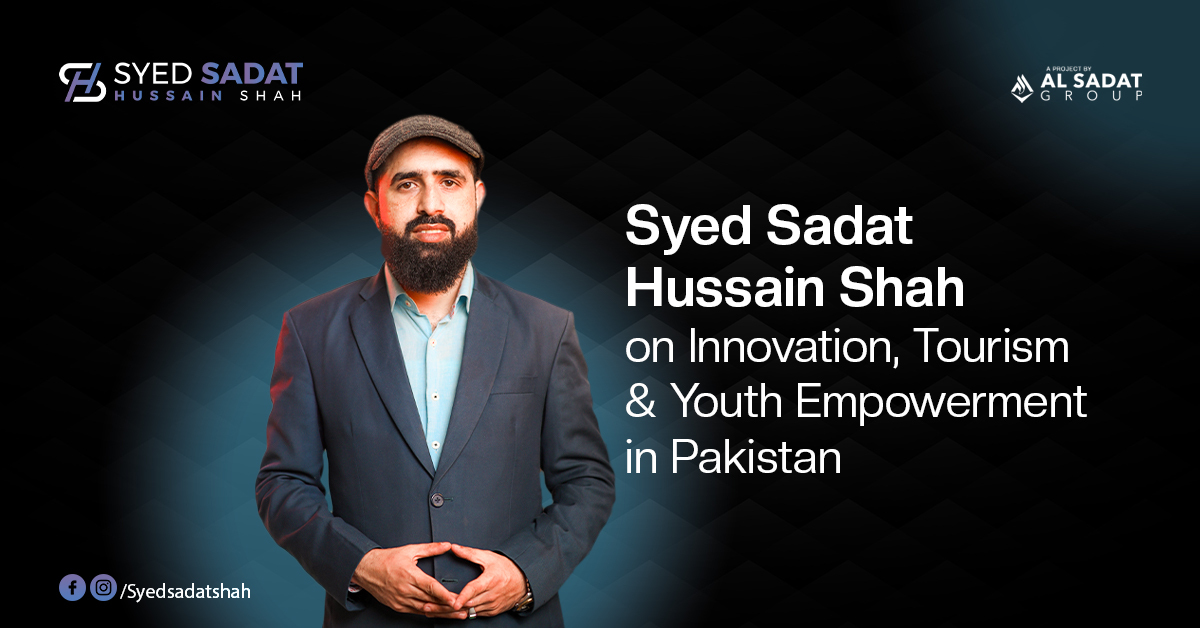
Pakistan has a problem that doesn’t get discussed honestly enough: we spend more time cataloguing what’s broken than we do building what could work. The tourism infrastructure, the startup ecosystem, the 120 million young Pakistanis under the age of 30 — these aren’t liabilities waiting to be managed. They’re the most underleveraged assets in South Asia.
That gap — between what Pakistan has and what Pakistan has actually done with it — is where I spend most of my thinking.
Innovation Is Not a Tech Industry Word
When people hear ‘innovation,’ they immediately picture Silicon Valley, venture capital, and smartphone apps. I understand the association. But that framing leaves most of Pakistan out of the conversation.
Real innovation is simpler and more urgent than that. It’s a farmer in Punjab getting real-time soil data on a basic phone. It’s a young woman in Quetta building a micro-enterprise through a platform that didn’t exist five years ago. It’s a district government digitizing land records so ordinary citizens stop losing years of their lives to bureaucratic paralysis.
None of those require a billion-dollar valuation. They require leadership that stops treating innovation as a slogan and starts building the conditions for it — better connectivity, less regulatory friction, and a school system that actually rewards problem-solving over memorization.
Tourism: The Economy We Keep Ignoring
I’ve said this in meetings, in policy discussions, in public forums: Pakistan may have the most magnificent, most undervisited geography on the planet. The Karakoram alone should be drawing the kind of attention that fills hotel rooms across three provinces. It isn’t, and the reasons are largely self-inflicted.
The infrastructure gap is real, yes. But the more stubborn problem is that we haven’t decided, at a policy level, that tourism is serious economic work. Countries like Georgia, Rwanda, and Bhutan made that decision — deliberately, with long-term commitment — and the GDP impact has been transformative.
Also Read: Why Syed Sadat Hussain Shah Believes Pakistan Can Become a Global Investment Hub
Tourism isn’t just about scenic photographs. It creates jobs in hospitality, transport, food, handicrafts, and digital services. It builds a case for investment in roads, airports, and safety. It shapes how the world sees Pakistan — and right now, the world’s perception of this country is lagging about twenty years behind the reality.
| “The generation coming up now — practical, connected, and frankly more impatient with failure than mine was — they are not the future of Pakistan. They are the present.” |
The Youth Question Is Not Rhetorical
Every political speech in Pakistan mentions the youth. Most of those mentions are decorative.
What young Pakistanis actually need is straightforward, if not simple: access to education that prepares them for work that exists, pathways into entrepreneurship that don’t require family connections to navigate, and civic institutions they can trust enough to engage with rather than route around.
I’ve met young people across this country doing extraordinary things with almost no institutional support — coders, farmers, teachers, engineers, social entrepreneurs. They don’t need anyone to believe in them. They need systems that don’t actively get in their way.
Fixing that is hard, incremental, and unglamorous work. It also happens to be the most important development challenge Pakistan faces over the next two decades.
What Leadership Actually Requires Here
There’s a version of leadership that’s about managing the current situation — navigating crises, containing damage, staying in office. That version produces stability of a kind. It doesn’t produce change.
The version I believe in is harder to execute and longer to pay off. It means investing in institutions before you need them, building coalitions across divisions that feel permanent but aren’t, and telling people the truth about tradeoffs even when the comfortable answer is available.
Pakistan has no shortage of talented, committed people who want to do that work. What it sometimes lacks is the political environment that lets those people do their jobs without being consumed by the noise. Creating that environment — that’s what leadership at the national level is actually for.
A Final Thought
There’s a version of Pakistan that works — not perfectly, but decisively better than today. It’s not a fantasy. The elements are visible: a young population that grew up more connected and more pragmatic than any previous generation, a diaspora with capital and skills and a genuine desire to contribute, natural assets that most countries would trade almost anything for, and a geographic position that’s either a strategic advantage or a liability depending entirely on how it’s managed.
Turning those elements into outcomes is a governance challenge. It’s a leadership challenge. It’s, frankly, a patience challenge — because none of this gets built in an election cycle.
But it gets built. That’s the part I refuse to stop believing.