
Pakistan has one of the youngest populations in the world, which creates a powerful opportunity for economic growth. Every year, thousands of young people enter the workforce with the hope of building careers and contributing to the country’s progress. However, a major challenge remains: many graduates and job seekers struggle to find employment because their skills do not align with market needs.
This gap between education, skill development, and industry demand is one of the most significant barriers to productivity and economic growth. For skill development to truly empower youth and strengthen the economy, training programs must reflect the evolving requirements of industry.
The Growing Gap Between Education and Industry
In many cases, training institutions and universities focus on theoretical learning rather than on the practical skills required by industry. As a result, graduates may hold degrees but lack the technical or professional abilities that employers are looking for.
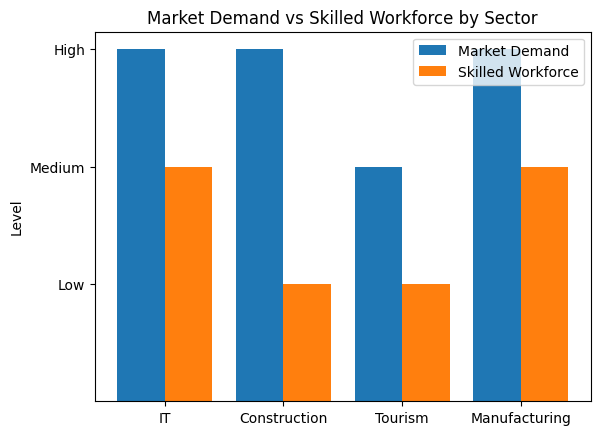
For example, the rapid growth of Pakistan’s information technology sector has created strong demand for software developers, cybersecurity specialists, and data analysts. Yet many IT graduates still require additional professional training before they meet industry expectations. This mismatch slows down employment opportunities and limits the sector’s full potential.
Also Read: How Public–Private Partnerships Can Unlock Tourism Growth
A similar challenge exists in sectors such as construction, tourism, hospitality, and manufacturing, where skilled technicians and trained professionals are often in short supply despite high unemployment rates.
Real Examples of Market-Driven Skill Development
Countries that successfully link skill development to industry demand often achieve stronger employment outcomes. For instance, Germany’s dual vocational training system combines classroom education with practical workplace training. Students spend time both in training institutions and directly in companies, ensuring that the skills they learn are immediately applicable in the job market.
In Pakistan, similar efforts are emerging. Programs such as NAVTTC (National Vocational and Technical Training Commission) and provincial initiatives like TEVTA training programs aim to prepare youth for industries including construction, hospitality, information technology, and technical trades. These initiatives demonstrate how aligning training programs with industry needs can improve employment prospects.
When businesses actively participate in training programs, the result is a workforce that is better prepared for real economic activity.
Why Market-Aligned Skills Strengthen the Economy
When skill development aligns with market demand, industries gain access to the skilled professionals they need to grow. Businesses operate more efficiently, productivity increases, and young professionals are better able to secure meaningful employment.
However, many sectors still face a significant gap between the demand for skilled workers and the available trained workforce. As illustrated in the graph below, industries such as IT, construction, tourism, and manufacturing require more skilled workers than are currently available. This imbalance slows down business growth and limits the full potential of economic sectors.
By aligning training programs with real industry needs, countries can reduce this skills gap, support entrepreneurship, and strengthen national competitiveness.
The Role of Public–Private Collaboration
One of the most effective ways to link skill development with market demand is through collaboration between training institutions and industry leaders. Businesses understand the evolving needs of their sectors, while educational institutions provide structured learning environments.
When both sectors work together, training programs can be designed to reflect real job requirements. Internship programs, apprenticeship systems, and industry-led certification programs help bridge the gap between education and employment.
Such partnerships also ensure that skill development initiatives remain adaptable as technology and economic priorities evolve.
Preparing Youth for Future Industries
As global economies change, new industries are emerging in areas such as digital technology, renewable energy, tourism services, and modern construction. Preparing youth for these sectors requires forward-looking skill development strategies.
Training programs must focus not only on technical expertise but also on problem-solving, digital literacy, communication skills, and entrepreneurship. These capabilities allow young professionals to adapt to changing market conditions and participate in new economic opportunities.
Countries that invest in market-driven skill development are better positioned to attract investment and sustain long-term economic growth.
Conclusion
Skill development is not simply about training individuals; it is about preparing a workforce that aligns with the needs of the economy. When education systems and training programs reflect real market demand, they create opportunities for youth, strengthen industries, and support national economic progress.
For Pakistan, linking skill development to market demand is essential for unlocking the full potential of its young population. By encouraging stronger collaboration between government institutions, training providers, and industry leaders, the country can build a workforce that is capable, competitive, and ready to drive future growth.