
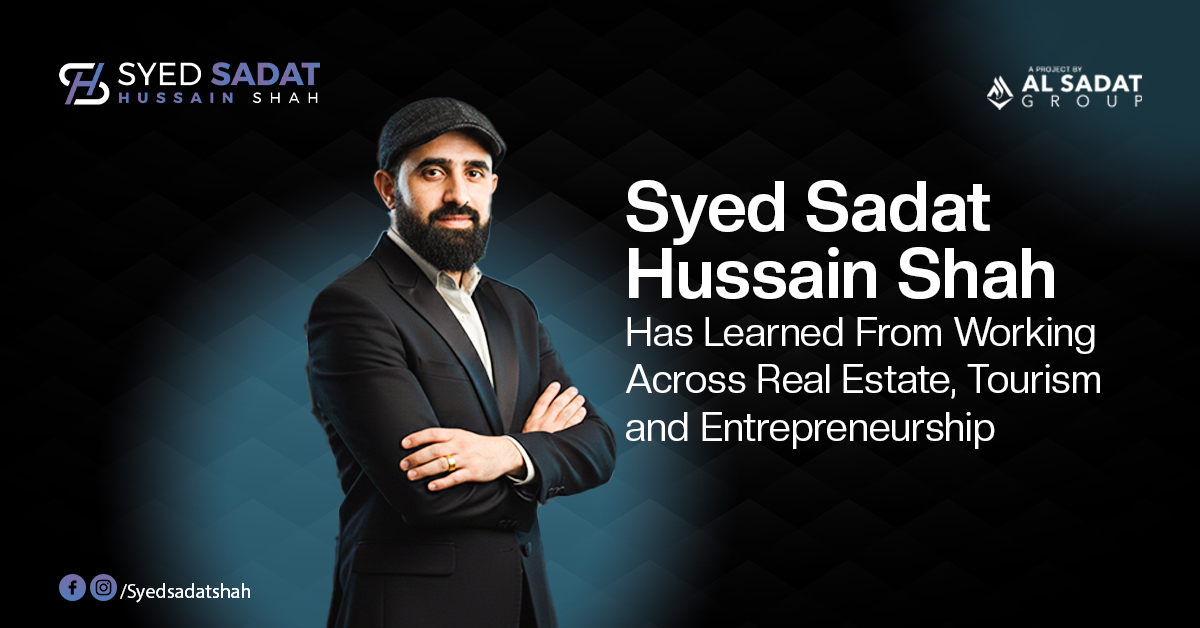
Real estate, tourism and entrepreneurship are usually treated as separate trades. Syed Sadat Hussain Shah’s work suggests they share one problem: earning the confidence of people who cannot fully check what they are buying until later. A buyer waits years for a home to be finished. A traveler trusts a destination before arriving. An investor backs a plan before it has produced anything. This article draws on his published writing and stated roles to pull out what that overlap teaches.
Syed Sadat Hussain Shah’s Professional Background
Syed Sadat Hussain Shah is a Pakistan-based businessman connected to Al Sadat Group and Chairman of Lakeshore City, a residential development near Khanpur Dam. According to his website, he began in the timber business, which gave him his first exposure to trade and negotiation, and he founded Al Sadat Marketing in 2015. He chairs the Hospitality Committee at ICCI and serves as Focal Person for Public & Private Tourism Partnerships. His site also links him to Seventeen Villas Islamabad, Tourism for Interfaith Peace and YES Pakistan’s youth programming. The lessons below come from these roles and his writing. They are his stated views, not audited results.
Four Lessons From Three Sectors
1. Trust is built after the contract is signed
Syed Sadat Hussain Shah’s writing notes that in real estate and travel, the biggest disappointments tend to appear after the agreement, not before it. So he treats trust as a daily habit, and argues that trust narrows the distance in negotiations. His website describes the market he entered in 2015 as disorganized and mistrusted, and says he answered with transparency and client education instead of louder marketing. A fair question for any developer follows from that: what happens after handover?
2. Value sits in what surrounds the asset
On location and long-term value, Syed Sadat Hussain Shah argues that a community works or fails on infrastructure sized for real use, not launch-phase appearances. He sets this out in his piece on what makes a modern planned community successful. Lakeshore City sits near Khanpur Dam and, per his website, was designed to combine nature with modern living. Location, in this view, is more than a point on a map. It is the roads, utilities and public space around the plot, and they decide whether a place still works a decade on.
3. Tourism is an experience system, not an attraction
Syed Sadat Hussain Shah is direct that property development does not create tourism on its own. A lake or waterfall earns the first visit. The roads, places to stay and places to eat nearby decide whether anyone returns. He also argues that infrastructure built only for peak season underserves residents. His article on the connection between real estate and tourism makes the case that both groups belong in one plan. His role in tourism partnerships is to connect private businesses with government tourism bodies, a job he describes in his piece on public-private partnerships.
4. Adaptability means fixed goals and flexible methods
Ideas that succeed rarely look like the original concept, Shah writes, so leaders should hold the goal steady and stay flexible on method. His website’s account of Lakeshore City follows that pattern: when permits were delayed, he strengthened legal protocols, and when criticism appeared online, he focused on clearer branding and transparency. It describes moves such as founding Al Sadat Marketing as calculated risks backed by research.
Practical Lessons for Entrepreneurs
- Ask whether the business would still deliver if you stepped away for a year. This test comes from his writing on sustainability.
- Look for the trust gap in your sector before the product gap.
- Design for the second visit, not the first.
- Bring regulators and public partners in early.
- When something fails, change the method and keep the purpose.
Frequently Asked Questions
What did Syed Sadat Hussain Shah do before real estate?
According to his website, he worked in the timber business, which introduced him to trade and negotiation. He founded Al Sadat Marketing in 2015.
How does he connect real estate and tourism?
He argues the two reinforce each other, but not automatically. Tourism creates demand for accommodation, retail and infrastructure, while real estate cannot manufacture appeal a destination lacks.
What does he say makes a business sustainable?
His writing names trust, useful innovation, adaptable leadership, collaboration and lasting value over quick revenue. He sets this out in what makes a business truly sustainable.
What tourism roles does he hold?
He is Chairman of the Hospitality Committee at ICCI and Focal Person for Public & Private Tourism Partnerships.
What the Three Sectors Have in Common
Across property, travel and business building, Syed Sadat Hussain Shah’s published thinking keeps returning to one test: does the work still hold up after the excitement fades? Apply it to a development, a destination or your own company, and it tends to expose what a launch announcement hides.