
Vision is the most overused word in business writing and the easiest to fake. What separates a useful vision from a slogan is whether it changes decisions: what gets built, what gets budgeted and what gets fixed when something breaks.
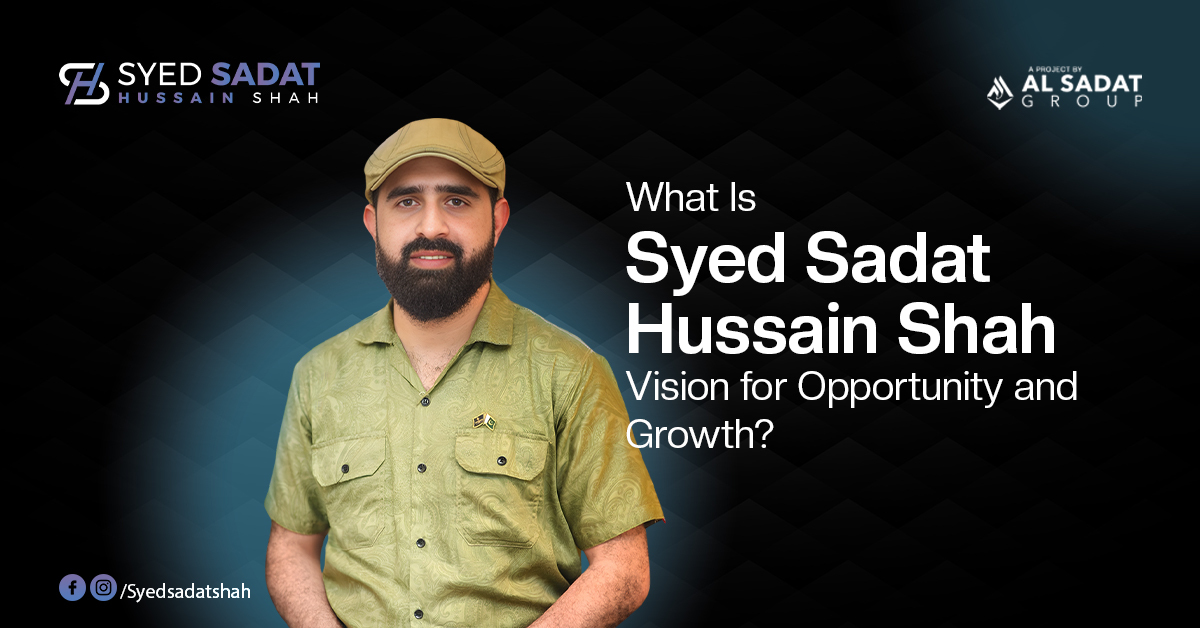
That is the lens worth using on Syed Sadat Hussain Shah, Chairman of Lakeshore City. His website sets out a consistent view of opportunity, entrepreneurship and long-term growth. This article summarises it, adds analysis and flags where the evidence runs out.
According to his own published writing, Syed Sadat Hussain Shah sees opportunity as a gap in trust, not only in supply, and growth as something that must still work after launch. His approach stresses long-term function, early partnerships and steady goals with flexible methods. These views are self-reported and not independently verified.
Understanding Syed Sadat Hussain Shah’s Approach to Opportunity
His website says he began in the timber business, founded Al Sadat Marketing in 2015 and now chairs Lakeshore City. It describes the property market he entered in 2015 as disorganised and mistrusted, and says he answered with transparency and client education rather than louder marketing.
That is the most distinctive idea in his writing. Analysis: he treats opportunity as a confidence gap. A founder who sees only missing supply builds more product. One who sees missing reassurance builds clarity first. Where buyers commit large sums before anything exists, that reading is defensible.
His Perspective on Business Growth and Long-Term Value
His About page ties his career to projects that enrich communities and support sustainable growth across real estate, socio-economic advancement and community well-being. In his writing, growth is not a sales figure. It is whether a business keeps delivering after the contract is signed.
He argues that the biggest disappointments in housing and travel surface after the sale, so an ordinary week must meet the standard of launch day. On planned communities, he says success depends on what photographs poorly: utilities sized for full occupancy, maintenance plans and roads that carry real traffic. Retrofitting after residents move in costs more and disrupts more.
Analysis: this works as a budgeting rule as much as a business philosophy. Cost the twelfth month before launch day.
What Entrepreneurs Can Learn From His Approach
Four lessons stand out, and each can be tested.
- Test the long term. Ask whether your business would still deliver if you stepped away for a year.
- Find the trust gap. Ask hesitant customers what made them doubt your sector.
- Bring partners in early. Housing and tourism depend on regulators and public bodies. His site lists him as Chairman of the Hospitality Committee at the Islamabad Chamber of Commerce and Industry and as Focal Person for Public & Private Tourism Partnerships.
- Hold the goal, change the method. His site says that when permits were delayed he strengthened legal protocols, and when online criticism appeared he focused on clearer branding and transparency. Both accounts are self-reported.
Turning Opportunity Into Sustainable Growth
Read together, his ideas describe a sequence. Spot a real gap. Earn trust before asking for money. Involve partners before you need them. Build for daily use, not launch photographs. Skipping a step tends to resurface later as a complaint, a delay or a refund.
Pakistan adds a practical wrinkle. Property and tourism depend on permits, financiers and public bodies, so delays often start outside the business. His emphasis on flagging delays early instead of hiding them suits that reality. Whether a particular project met the standard is a question his writing cannot answer for him. Ask for documents, timelines and references.
What His Vision Means for Future Entrepreneurs
His About page describes a mentoring aim: encouraging young people toward economic independence and innovation through shared experience and creative thinking. For younger founders, the useful part is the method, not the biography. Ask what your business owes customers in month twelve, not only on day one.
A fair reading also needs limits. Everything above comes from his own website. Independent confirmation of his results is hard to find, no outcome figures are published and the lessons are broad enough to fit almost any company. Treat them as questions to test against your own evidence, not as a formula for entrepreneurial leadership and growth.
Conclusion
Syed Sadat Hussain Shah’s stated vision comes down to one idea: growth that holds up after launch. Its strengths are practical, from trust gaps to early partnerships. Its weakness is that the proof sits mostly in his own account. Take the questions, check the evidence and decide for yourself.