
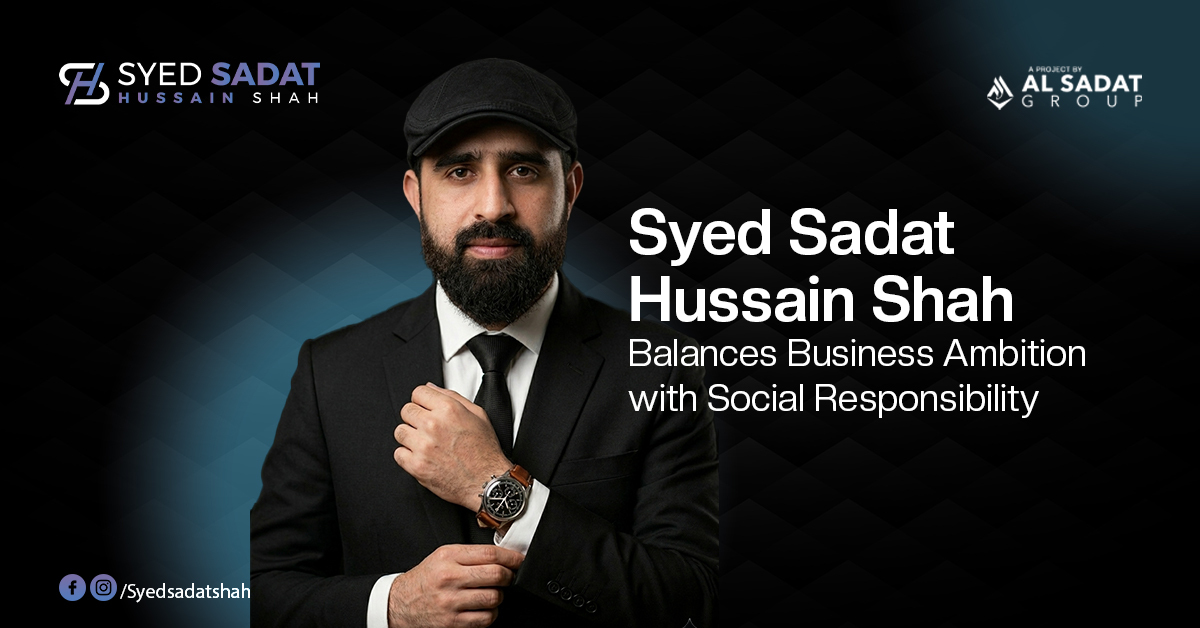
Investment, growth, profitability, and market position are frequently used to gauge a company’s success. However, a more comprehensive viewpoint is necessary for responsible leadership. It entails understanding how corporate choices impact workers, communities, businesses, and the whole economy. Balancing business aspirations with social duty is especially crucial in developing nations like Pakistan, where social concerns and economic opportunity coexist.
A corporate leadership viewpoint that links private-sector progress with more extensive economic and social prospects is embodied by Syed Sadat Hussain Shah. He works in real estate, tourism, hospitality, and young entrepreneurship. These sectors provide many avenues for promoting economic activity while attending to the requirements of local communities and future generations.
It is possible to investigate the role of responsible investment, community development, youth empowerment, and sustainable business practices in Pakistan by comprehending how Syed Sadat Hussain Shah strikes a balance between business ambition and social responsibility.
Viewing Business Growth as a Long-Term Responsibility
Building effective organizations requires a strong sense of ambition. Leaders must manage resources, find opportunities, draw in investment, and create growth-promoting plans. However, concentrating solely on short-term financial gains may reduce a company’s long-term worth.
A responsible approach takes into account how company choices can benefit stakeholders in the long run. This entails creating initiatives that address market demands, promoting economic activity, and upholding professional standards.
Syed Sadat Hussain Shah’s interest in industries that have the potential to impact broader economic activity is demonstrated by his involvement in real estate and development. Infrastructure, jobs, business possibilities, and organized communities can all benefit from real estate development provided it is accompanied by appropriate planning.
Balancing ambition with responsibility requires leaders to:
- Set clear long-term business objectives.
- Consider the interests of investors and other stakeholders.
- Prioritise planning and responsible development.
- Understand the economic and social impact of projects.
- Measure success through lasting value, not only short-term returns.
This approach makes business growth part of a wider development process.
Connecting Private Investment with Economic Development
Pakistan’s economy is strengthened in large part by private investment. It promotes corporate growth, job creation, competition, and the development of industries that need long-term funding.
For business leaders, the challenge is to identify investment opportunities that offer commercial potential while contributing to economic progress.
Syed Sadat Hussain Shah’s career in real estate, hospitality, and tourism demonstrates areas where private investment can help achieve more general development goals. Investing in these sectors can boost business support, enhance services, and open doors for local communities and professions.
Investing responsibly entails more than just allocating funds. It also necessitates comprehending market conditions, assessing risks, upholding transparency, and taking a project’s long-term survival into account.
When business ambition is guided by these principles, private-sector activity can contribute to a stronger and more diverse economy.
Promoting Tourism Alongside Commercial Opportunities
One significant sector where social responsibility and corporate development can coexist is tourism. Pakistan offers potential for tourist expansion due to its varied natural landscapes, historical monuments, religious history, and cultural traditions.
But growing tourism calls for more than just drawing tourists. It include enhancing infrastructure, assisting regional communities, safeguarding cultural assets, and promoting responsible tourism.
Syed Sadat Hussain Shah’s professional interest in tourism and hospitality reflects the potential of this sector to generate economic opportunities. His involvement in public-private tourism partnerships also highlights the importance of cooperation between government institutions and private businesses.
Responsible tourism development can contribute to:
- Employment in hospitality, transport, and tourism services.
- Growth of local businesses and small enterprises.
- Better visitor facilities and supporting infrastructure.
- Greater visibility for cultural and natural destinations.
- Opportunities for regional investment.
The commercial potential of tourism becomes more sustainable when local communities also benefit from its growth.
Supporting Youth Through Mentorship and Entrepreneurship
Social responsibility is not limited to financial contributions or community projects. Creating opportunities for people to develop their skills and become economically independent is another important aspect of responsible leadership.
Pakistan’s young population represents significant potential for entrepreneurship, innovation, and professional development. However, many young people need access to mentorship, practical guidance, networks, and opportunities to turn their ambitions into productive careers.
Youth entrepreneurship and mentorship are among the areas identified in Syed Sadat Hussain Shah’s public professional profile. This reflects the importance of supporting young people as contributors to economic growth rather than viewing them only as future participants in the workforce.
Business leaders can encourage youth development by:
- Sharing practical business knowledge and experience.
- Supporting professional mentorship opportunities.
- Encouraging entrepreneurship and independent thinking.
- Connecting young people with relevant industry networks.
- Promoting skills development and responsible leadership.
Investing in young people can create benefits that extend beyond individual careers. Skilled and confident young professionals can contribute to stronger businesses, innovation, and national development.
Building Trust Through Transparency and Accountability
A successful business cannot maintain strong relationships without trust. Investors, customers, employees, and business partners expect organisations to communicate honestly and act responsibly.
Transparency is particularly important in sectors such as real estate, where customers and investors make decisions involving long-term financial commitments. Clear information, responsible communication, and professional accountability help establish confidence.
For Syed Sadat Hussain Shah, the connection between business leadership and responsible practices can be understood through the importance of maintaining trust across professional relationships.
Responsible business conduct includes:
- Communicating project information accurately.
- Explaining commitments and expectations clearly.
- Addressing stakeholder concerns professionally.
- Taking responsibility for business decisions.
- Maintaining consistent standards of service and communication.
These practices support more than an organisation’s reputation. They help create a business environment in which stakeholders can make informed decisions and develop lasting professional relationships.
Encouraging Collaboration for Wider Social Impact
Many development challenges cannot be addressed by individual businesses working independently. Economic progress often requires cooperation between private companies, government institutions, industry representatives, and local communities.
Collaboration can help businesses combine resources, share expertise, and develop initiatives that address wider needs.
Syed Sadat Hussain Shah’s professional roles across business and institutional platforms provide a context for understanding the importance of such partnerships. His listed involvement in hospitality and public-private tourism initiatives reflects the value of connecting different stakeholders.
Effective collaboration can support:
- Tourism promotion and destination development.
- Investment in infrastructure and supporting services.
- Knowledge-sharing between industries.
- Opportunities for local entrepreneurs.
- Joint initiatives that address community needs.
When business leaders encourage cooperation, commercial activity can become part of a broader effort to create economic and social opportunities.
Making Sustainability Part of Business Decisions
Social responsibility also involves thinking about the future. Businesses that ignore environmental considerations, community needs, and changing market conditions may struggle to maintain their long-term value.
Sustainable development requires leaders to consider the lasting consequences of their decisions. In real estate, this can include responsible planning, efficient use of resources, and infrastructure that supports the needs of residents and businesses. In tourism, it can mean respecting natural environments and cultural heritage.
For Syed Sadat Hussain Shah, the wider connection between development, tourism, and community opportunities provides a relevant framework for considering sustainability as part of business leadership.
A sustainable approach encourages organisations to:
- Consider environmental and community impacts.
- Plan developments around long-term requirements.
- Support responsible use of resources.
- Respect local culture and surrounding environments.
- Evaluate the lasting value of business initiatives.
Sustainability is not separate from business ambition. It can strengthen the foundations on which future growth depends.
Business Success with a Wider Purpose
Balancing business ambition with social responsibility requires leaders to look beyond financial performance and consider the wider impact of their decisions. The professional interests and activities associated with Syed Sadat Hussain Shah bring together several areas where commercial development can connect with economic and social opportunities.
Through real estate, tourism, hospitality, youth mentorship, and professional collaboration, these themes highlight the importance of responsible investment and long-term thinking.
For Pakistan, the broader lesson is that business growth and social progress do not have to be competing priorities. When organisations operate with accountability, invest responsibly, support young people, and consider community needs, they can contribute to a stronger economic environment.
Ultimately, meaningful business leadership is not only about building successful enterprises. It is also about creating opportunities, strengthening relationships, and contributing to progress that can benefit future generations.
FAQs
1. Who is Syed Sadat Hussain Shah?
Syed Sadat Hussain Shah is a Pakistani business leader associated with real estate, tourism, hospitality, and youth entrepreneurship initiatives.
2. What does balancing business ambition with social responsibility mean?
It means pursuing commercial growth while considering the impact of business decisions on employees, communities, stakeholders, and the wider economy.
3. How can private investment contribute to social development in Pakistan?
Private investment can support employment, infrastructure, business expansion, tourism, and opportunities for local communities.
4. What role does tourism play in responsible business development?
Tourism can create employment, support local enterprises, promote cultural heritage, and encourage investment in regional infrastructure.
5. Why is youth empowerment important for business leaders?
Youth empowerment helps young people gain skills, mentorship, and professional opportunities, strengthening the future workforce and entrepreneurial environment.
6. How can businesses incorporate sustainability into their decisions?
Businesses can consider environmental impacts, use resources responsibly, plan for long-term needs, and respect the communities in which they operate.
7. Can business profitability and social responsibility work together?
Yes. Responsible practices can strengthen trust, improve relationships, support sustainable growth, and create long-term value for businesses and communities.