
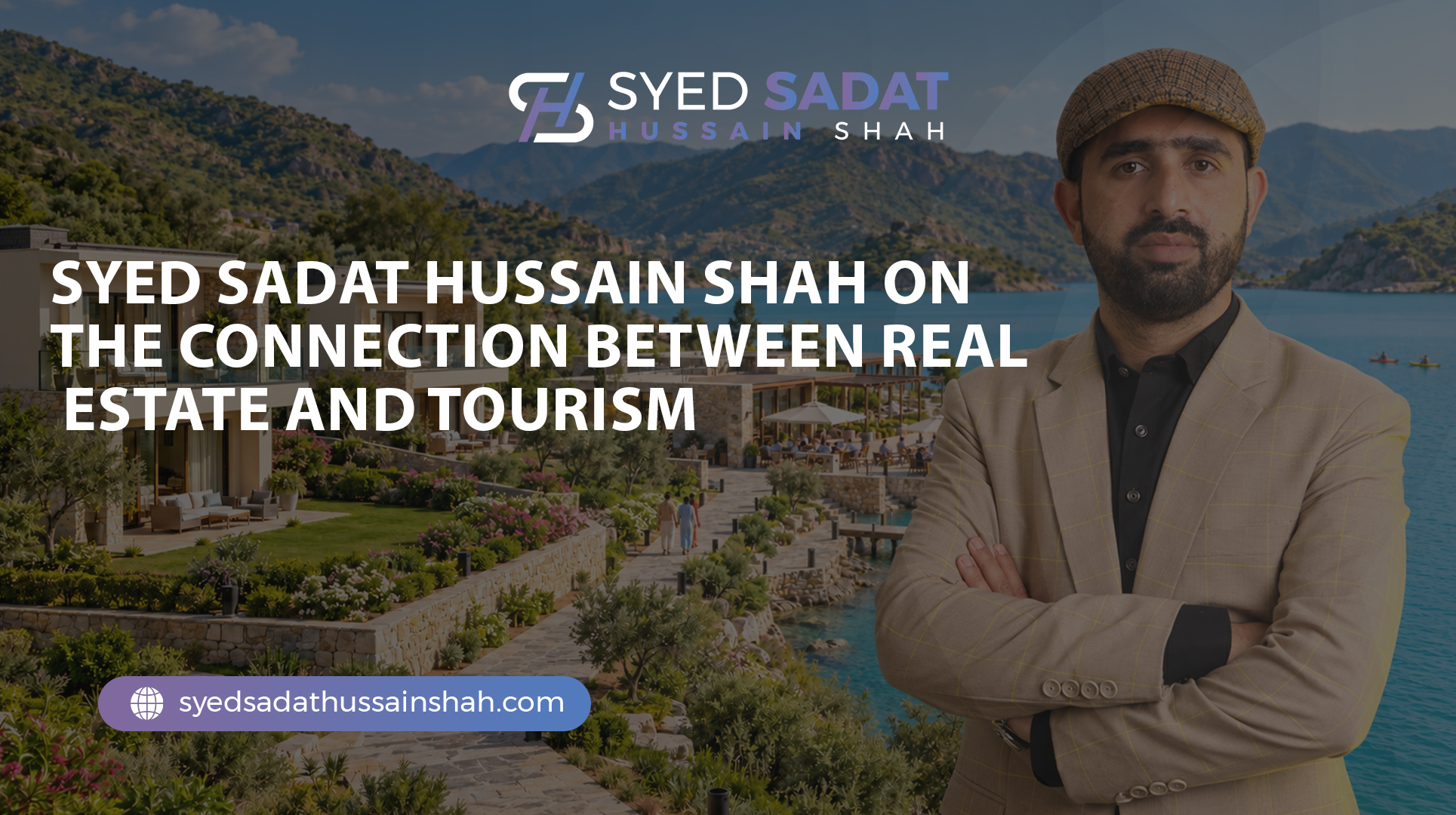
Real estate and tourism reinforce each other, but not automatically. Visitor demand can create demand for accommodation, retail, and infrastructure, and well-planned development strengthens a destination’s ability to host and serve visitors. Real estate alone, however, doesn’t generate tourism growth; that depends on the destination’s appeal, accessibility, and long-term, sustainable planning.
A destination isn’t defined only by what draws people there. A waterfall, a historic site, or a lake pulls the first visit, but what brings people back, and what turns a place into somewhere people actually want to live near, has more to do with what surrounds the attraction: the roads that reach it, the places to stay, eat, and shop nearby, and whether the surrounding area feels built for people or left to develop on its own. Real estate and tourism sit closer together than most conversations about either one suggest, and understanding that relationship matters for anyone thinking seriously about long-term development.
Why Tourism and Real Estate Are Closely Connected
Visitor demand rarely stays contained to a single site. Once a destination draws steady traffic, that demand tends to spill outward, into a need for places to stay overnight, restaurants and cafes, transport links, and basic infrastructure that supports both visitors and the people living nearby. Real estate development is one of the main ways that spillover gets absorbed. Hotels, guesthouses, retail space, and improved roads don’t appear automatically once a place becomes popular; someone has to plan, finance, and build them, and how well that happens shapes whether a destination matures into something sustainable or strains under its own popularity.
That said, the relationship isn’t automatic in the other direction. Building real estate near a destination doesn’t guarantee tourism growth, and treating property development as a shortcut to visitor demand misreads how the two actually interact. Tourism grows when a destination offers something worth the trip and the infrastructure to support it comfortably. Real estate’s role is to strengthen that offer, not manufacture demand that isn’t there.
How Real Estate Can Strengthen Tourism Destinations
Well-planned development supports tourism in several concrete ways. Hospitality and accommodation give visitors somewhere to stay that matches the length and purpose of their trip, from short day-trip stopovers to longer stays. Retail and commercial spaces give a destination an economy beyond the attraction itself, somewhere for visitors to spend time and money before or after the main draw. Recreation and entertainment options extend a visit past a single afternoon, and accessibility — roads, parking, and transport links — decides whether any of this is usable in practice.
None of these elements works well in isolation. A hotel without decent road access, or retail space with nowhere for visitors to park, solves half a problem. The developments that actually strengthen a destination tend to treat accommodation, commerce, recreation, and infrastructure as one connected system rather than separate projects built independently of each other.
The Role of Planned Communities
This is where planned communities become relevant to the tourism conversation, not as an adjacent topic but as a direct extension of it. A community built with infrastructure, accessibility, and long-term maintenance considered from the outset is better positioned to support nearby tourism activity than one where those elements were an afterthought. Syed Sadat Hussain Shah has written about what makes a modern planned community successful, arguing that a community’s long-term function depends on infrastructure sized for real use rather than launch-phase appearances. The same logic applies directly to communities positioned near tourism destinations: the roads, utilities, and public spaces built to serve residents are often the same ones that determine whether visitors have a workable experience too.
Tourism Can Create Wider Economic Opportunities
Tourism activity around a well-developed destination tends to support more than the businesses directly serving visitors. Local employment in hospitality, retail, transport, and maintenance grows alongside visitor numbers, and steady tourism traffic can make an area more attractive for further investment and services that benefit residents as much as travelers. This effect isn’t automatic or guaranteed — it depends heavily on how development is planned and whether local businesses are positioned to participate — but it’s a realistic upside when tourism and real estate growth are approached together rather than as separate tracks.
Why Sustainability Matters
None of this holds up long-term without sustainable planning. Development driven purely by short-term visitor spikes tends to overbuild in some areas and neglect infrastructure capacity in others, leaving a destination worse off once initial interest cools. Environmental considerations, water and waste systems, green space, and building density all need to be sized for sustained use rather than peak-season demand alone. Shah’s writing on what makes a business truly sustainable centers lasting value over quick revenue, a principle that applies just as directly to how tourism-adjacent real estate gets planned. Development built for a single strong season rarely holds up as well as development built for the community and destination it’s part of over the following decade.
A Balanced Approach to Real Estate and Tourism
The strongest version of this relationship serves visitors and residents at the same time, rather than optimizing for one at the expense of the other. Infrastructure built only for peak tourist season underserves the people who live there year-round. Development built only for residents, with no regard for visitor access or experience, leaves tourism potential unrealized. The more durable approach treats both groups as part of the same planning problem, and Shah’s writing across real estate and community development consistently returns to that same balance: infrastructure, trust, and long-term function over short-term appearance, whether the audience is a resident, an investor, or a visitor passing through.
Frequently Asked Questions
What is the relationship between real estate and tourism?
Tourism creates demand for accommodation, retail, recreation, and infrastructure, and real estate development is one of the main ways that demand gets absorbed and supported over time.
Does building real estate near a destination guarantee more tourism?
No. Real estate can strengthen a destination’s ability to host and serve visitors, but tourism growth depends on the destination’s appeal and experience, not property development alone.
How do planned communities support tourism destinations?
Planned communities built with infrastructure, accessibility, and maintenance considered from the outset create the same roads, utilities, and public spaces that make nearby tourism activity workable for visitors.
Why does sustainability matter in tourism-related real estate development?
Development built only for peak-season visitor demand tends to strain infrastructure and underserve residents over time. Sustainable planning sizes infrastructure and environmental systems for long-term, year-round use.