
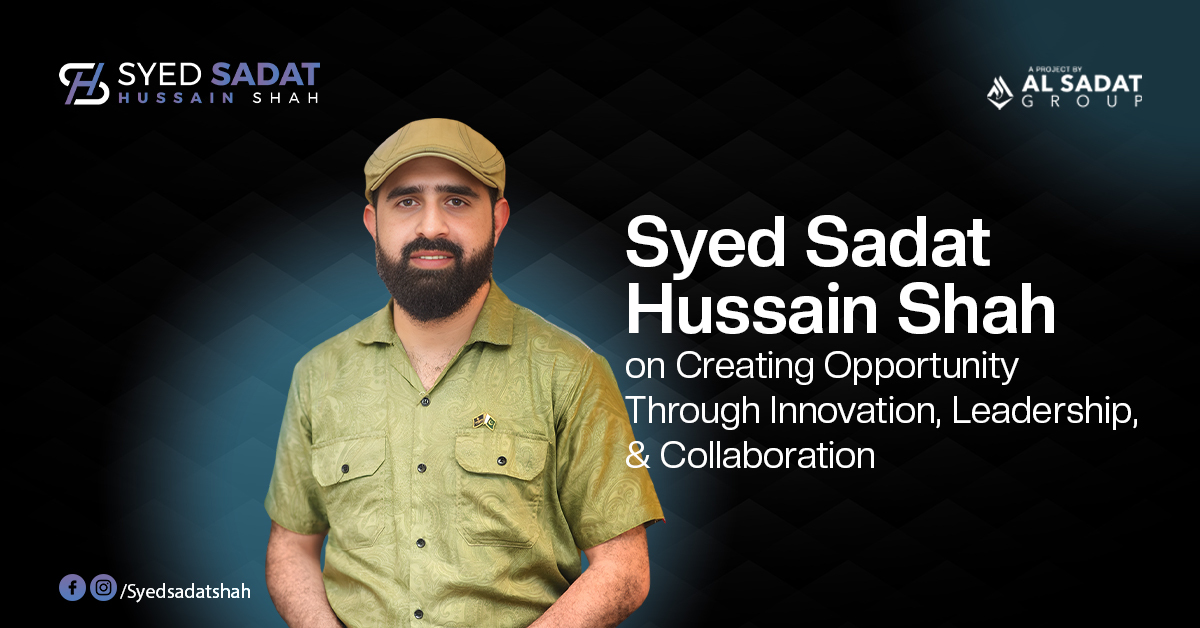
Opportunity rarely announces itself. It shows up disguised as a gap nobody has bothered to close, or a sector everyone assumes is already settled. The businesses that find it aren’t necessarily the ones with the most capital — they’re the ones willing to look at an old problem through a new lens, and willing to bring other people along to solve it.
That combination — innovation paired with collaboration — is a more reliable engine for growth than either alone. Innovation without partners tends to stay small; collaboration without a fresh idea tends to produce more of the same. Put both under the right kind of leadership, and you get something rarer: opportunity that didn’t exist before someone decided to create it.
Innovation Is Rarely About Invention
Innovation, in a business context, doesn’t require inventing something new from scratch. It’s often the discipline of applying an existing idea to a place it hasn’t been tried — a financing structure borrowed from one sector and adapted to another, a service model reshaped for a different audience. Businesses that treat innovation this way move faster than those waiting for a breakthrough moment, because they’re testing small adjustments rather than gambling on one large one.
Leadership Turns Ideas Into Action
Leadership determines whether that innovation actually reaches the market. An idea sitting in a strategy document does nothing; it needs someone willing to make a decision under uncertainty and give a team direction before every variable is known. That’s a different skill from simply managing operations well — it’s the willingness to commit resources to something unproven because the underlying logic holds up, even when the outcome doesn’t yet.
Collaboration Is What Lets It Scale
Collaboration is what lets that commitment scale. Few opportunities today sit neatly inside one industry. Real estate development depends on regulatory bodies, financing partners, and construction ecosystems. Tourism depends on transport, hospitality, and cultural institutions moving in the same direction. Public-private collaboration in particular has become less of a formality and more of a necessity — the private sector brings speed and capital, the public sector brings scale and legitimacy, and neither moves as far alone.
Where Syed Sadat Hussain Shah’s Work Fits This Pattern
Syed Sadat Hussain Shah’s documented professional footprint offers a useful case for this pattern, precisely because it doesn’t sit inside a single sector. His work is connected to Al Sadat Group’s ventures across residential real estate, including projects such as Lakeshore City and Seventeen Villas in Islamabad, alongside Tourism for Interfaith Peace, which links cultural and religious tourism to hospitality, and YES Pakistan’s youth-focused programming. That spread across real estate, tourism, and youth-facing initiatives is a documented fact about the scope of the work; what it suggests about strategy is interpretation — but a reasonable one. Sectors that look unrelated on paper often share the same underlying requirements: securing trust from stakeholders, coordinating multiple institutions, and building something durable enough to outlast a single project cycle. Operating across several at once is one way opportunity gets created rather than simply found — a theme explored further in a related piece on what it actually means to build a business rather than just launch one.
Practical Lessons for Business Leaders
For business leaders looking to apply this outside any one industry, a few habits carry over regardless of sector. Look for adjacent problems your existing relationships already put you close to, rather than starting a new venture from zero. Treat partnerships as a core part of strategy, not a workaround for resources you lack. And resist the temptation to wait for certainty before committing — most real opportunities are acted on before all the evidence is in, which is also why the relationships behind those decisions matter as much as the decisions themselves, a point that connects closely to why trust remains foundational in modern business.
Conclusion
None of this makes opportunity easy to manufacture. It still depends on timing, market conditions, and factors no leader fully controls. But the pattern holds: innovation identifies where value is hiding, leadership decides to act on it, and collaboration turns that decision into something real. Businesses that treat those three as connected — rather than as separate skills developed in isolation — tend to keep finding new ground long after their first opportunity has been built out.