
A plot of land, on its own, doesn’t do much. It’s what gets built around it — roads that actually connect somewhere, a school within reasonable distance, a market people want to walk to — that decides whether a piece of property turns into a place worth living. That’s the shift underway in how real estate gets planned and sold, in Pakistan and elsewhere: land ownership used to be the whole pitch. Now it’s just the starting point.
Why Real Estate Is Evolving Beyond Land Ownership
For a long time, buying property in Pakistan meant buying a location and hoping the rest sorted itself out — roads later, utilities later, a market maybe. That worked when demand outstripped everything else. It works less well now. Buyers today ask what a community will actually be like to live in, not just where its boundary lines sit on a map.
That’s what real estate beyond land ownership looks like in practice: development judged by the life it supports, not the acreage it covers. Infrastructure, accessibility, and day-to-day livability now sit alongside price and location as reasons someone chooses one project over another. The future of real estate in Pakistan is being shaped by that shift, project by project.
What Creates Long-Term Value in Modern Property Development
A handful of factors keep showing up in developments that hold their value over years rather than just at launch.
Community and infrastructure. Roads, drainage, utilities, and shared spaces planned for a community’s full size — not just its first phase — save residents from years of retrofit problems. This is one of the clearest markers of community-focused real estate development: infrastructure sized for the community people will actually live in.
Accessibility. How easily people reach work, schools, healthcare, and transport links affects daily life and long-term demand. This doesn’t guarantee anything about future value — markets move — but it’s a dependable signal buyers can check for themselves.
Hospitality and tourism integration. In places with genuine visitor appeal, real estate and hospitality planning increasingly overlap. A development near a destination worth visiting benefits from thinking about guests as well as residents — hotels, guesthouses, and the local businesses that depend on steady footfall from both. A closer look at what happens when real estate meets tourism goes into this overlap, and it’s especially relevant where Pakistan’s tourism potential has outpaced its property planning.
Sustainability. Sustainable real estate development isn’t a separate category anymore — it’s part of what makes infrastructure and community planning hold up over time, from water management to how much of a site stays open.
Economic opportunity. Development that brings employment, local business activity, and services does more for a place than one that only brings buyers. That’s the difference between selling plots and building somewhere people actually want to be.
A Leadership Perspective Rooted in These Values
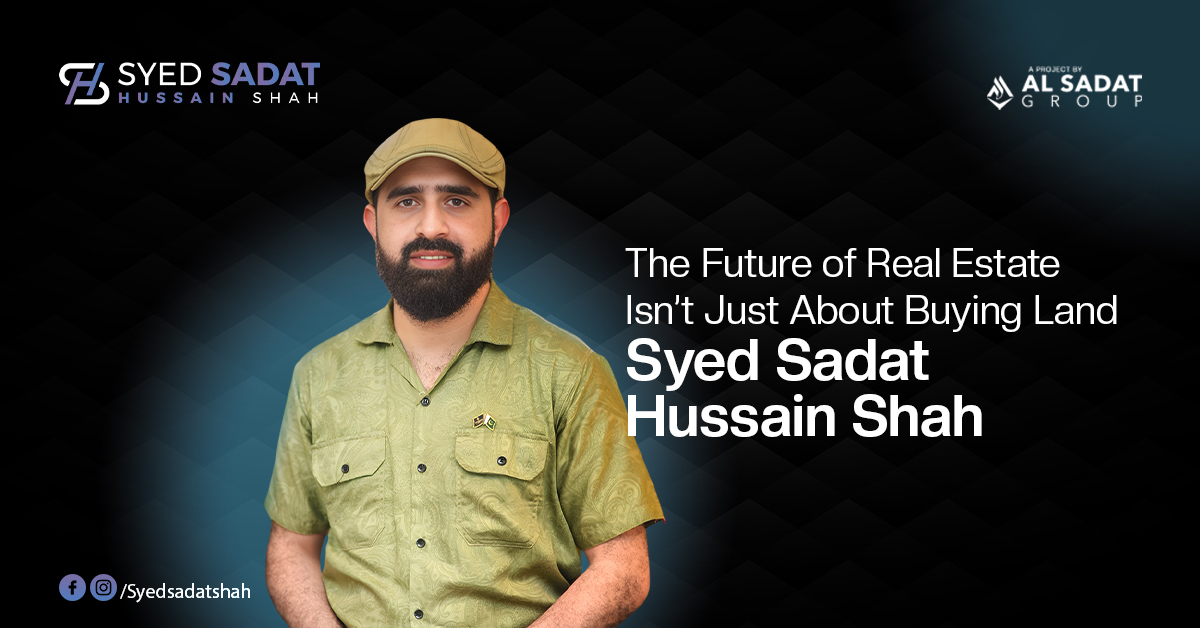
Syed Sadat Hussain Shah’s work sits at the intersection of several of these ideas. As Chairman of Al Sadat Group and Chairman of the Hospitality Committee at the Islamabad Chamber of Commerce and Industry, his roles span residential development and tourism promotion rather than treating them as separate lanes — which lines up with how real estate and tourism in Pakistan increasingly overlap.
That approach isn’t only about the projects themselves. The values that shape his broader journey — trust, long-term thinking, bringing the right people into a project rather than working alone — show up across his roles in real estate, tourism, and youth mentorship.
It also connects to a broader question about what leadership is for. Whether leaders should chase success or impact applies directly to real estate: a project can hit every sales target and still fail the people who live there for the next twenty years. The more durable measure is whether a development still works, for residents and the area around it, long after the sale closes.
What This Means Going Forward
Modern real estate development in Pakistan is increasingly judged on more than square footage and price per marla. Community planning, accessibility, hospitality potential, and long-term livability now factor into how buyers evaluate a property, and how developers ought to think before they break ground.
FAQs
What does “the future of real estate” mean beyond land ownership?
Judging a property by the community, infrastructure, and daily life it supports, not just its location or plot size.
Why is real estate and tourism increasingly connected in Pakistan?
Destinations with strong tourism potential need real estate planning that serves residents and visitors together, and Pakistan has more potential than its infrastructure has caught up to.
What role does sustainability play in modern real estate development?
It’s part of what determines whether a development still functions well years later — water management, open space, and infrastructure that holds up as a community grows.
How does Syed Sadat Hussain Shah’s leadership connect to these ideas?
His roles across Lakeshore City and tourism partnerships reflect a consistent focus on long-term value and community outcomes over individual transactions.