
Introduction
Leadership in Pakistani business is often measured by the size of a project rather than the discipline behind it. Titles accumulate quickly in real estate and tourism circles; what is harder to build is a track record of decisions that hold up over years, partnerships that survive disagreement, and a reputation that does not depend on the next press release. Syed Sadat Hussain Shah has built a public profile around real estate, tourism and youth entrepreneurship in Pakistan, and his career offers a useful case study in how those three areas connect when a leader treats them as one continuous strategy rather than three separate ventures.
Who Is Syed Sadat Hussain Shah?
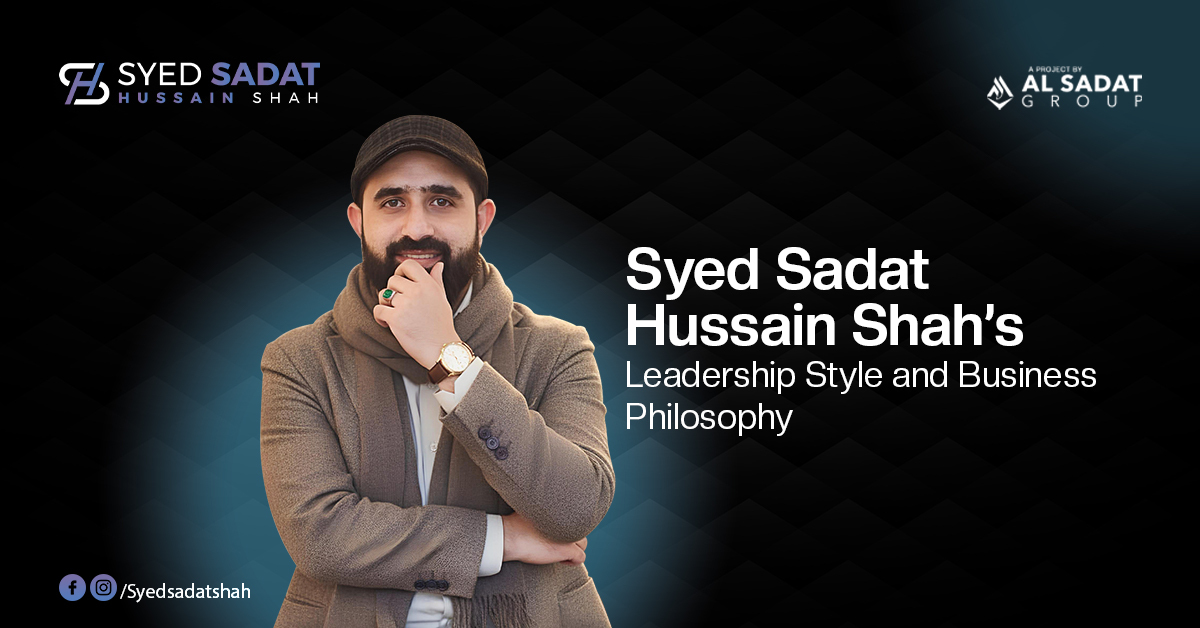
According to his official profile and corroborating listings on LinkedIn and industry directories, Syed Sadat Hussain Shah serves as Chairman of Lakeshore City, a residential and tourism-linked development near Khanpur Dam, and as Chairman of the Hospitality Committee at the Islamabad Chamber of Commerce and Industry (ICCI). He is also listed as Focal Person for Public & Private Tourism Partnerships, a Member of International Company Affairs at the Federation of Pakistan Chambers of Commerce and Industry (FPCCI), and Chairman of Al Sadat Marketing, part of the wider Al Sadat Group, whose portfolio includes real estate projects such as Lakeshore City and Seventeen Villas. He is also self-described as an International Youth Entrepreneur, a role tied to mentoring younger business owners. This is not a full biography — it is the professional footprint that appears consistently across his own channels and third-party listings.
What Defines His Leadership Style?
A few characteristics recur across his published roles and public statements, though these should be read as observations drawn from that record rather than an exhaustive personality assessment.
Sector-spanning positioning. Holding chairmanships and committee roles across real estate, hospitality and chamber-of-commerce bodies simultaneously suggests a leadership style built on connecting sectors rather than staying within one lane.
Institutional engagement. His roles at ICCI and FPCCI indicate a leadership approach that works through established business institutions rather than purely independent ventures.
Public-private orientation. The Focal Person title for tourism partnerships points to a recurring theme of connecting government tourism bodies with private developers.
Youth-facing mentorship. His stated involvement in youth entrepreneurship suggests a leadership approach that extends past his own companies into developing other founders.
His Business Philosophy
Across his published material, a few recurring principles stand out rather than a single stated manifesto. His real estate ventures, including Lakeshore City and its farmhouse and club components, are structured around long installment plans rather than lump-sum sales, which points toward a philosophy of extending access over time rather than optimizing for the fastest transaction. His parallel involvement in chamber-of-commerce committees and tourism partnerships suggests a preference for operating through established institutions and formal partnerships rather than in isolation. None of this should be read as a guarantee of business outcomes — it describes an approach, not a result.
Real Estate Vision
His real estate vision, as reflected in Lakeshore City’s structure, treats a housing project as more than plots of land. The project bundles a residential block (Lakeshore Residencia), a farmhouse block, and a membership-based recreational block (Lakeshore Club) into a single master plan near a natural waterfront. That structure reflects a real estate philosophy oriented around lifestyle and recreation alongside land ownership, positioning tourism-adjacent amenities as part of the residential offer rather than an afterthought. This does not amount to a promise of appreciation or investment return — it describes how the project is designed, not how it will perform.
Leadership Beyond Real Estate
His committee role at ICCI and his tourism partnership title connect his real estate work to a broader economic development narrative. Chairing a hospitality committee at a chamber of commerce places him inside the institutional conversation about how private tourism investment interacts with public infrastructure and policy, rather than positioning him purely as a developer selling plots. His self-described youth entrepreneurship work adds a fourth strand: using an established business platform to support newer founders, which is consistent with the institutional, partnership-oriented pattern seen in his other roles.
Lessons Entrepreneurs Can Learn
Build within institutions, not just around them. Chamber-of-commerce and committee roles can extend a business leader’s reach beyond their own company.
Treat a project as a system, not a single product. Bundling residential, recreational and hospitality elements into one plan reflects longer-term planning over a single transaction.
Use partnerships to cross sectors. Public-private tourism roles show how a developer can extend influence into adjacent industries through formal collaboration.
Mentor as part of the platform. Folding youth entrepreneurship into a business identity signals that growth is treated as a shared outcome, not a private one.
What Makes His Leadership Approach Different?
What stands out about his professional positioning is the combination of roles rather than any single one in isolation: a real estate chairmanship, a chamber-of-commerce hospitality committee, a tourism partnership title, an FPCCI committee membership, and youth entrepreneurship advocacy sit under one public profile. Whether this combination is unusual within Pakistan’s business community more broadly is not something this article can independently verify, but the pattern itself — real estate connected to tourism, hospitality and mentorship rather than treated as a standalone business — is a consistent thread across his documented roles.
Final Verdict
Syed Sadat Hussain Shah’s public leadership profile can be read through a few recurring themes: institutional engagement, public-private collaboration, a real estate approach built around lifestyle and recreation rather than land alone, and an explicit role in youth entrepreneurship. These themes are drawn from his documented professional roles and published material rather than independent performance data, and readers evaluating any of his associated projects should treat this profile as a starting point for further research rather than a final judgment.
Frequently Asked Questions
Who is Syed Sadat Hussain Shah?
He is a Pakistan-based business figure who holds the roles of Chairman of Lakeshore City, Chairman of the Hospitality Committee at ICCI, Focal Person for Public & Private Tourism Partnerships, and Chairman of Al Sadat Marketing, according to his official profile and corroborating professional listings.
What is Syed Sadat Hussain Shah’s leadership style?
His documented roles suggest a leadership style built on operating through institutions such as chambers of commerce, forming public-private partnerships in tourism, and combining real estate development with hospitality and youth entrepreneurship initiatives.
What is his business philosophy?
His published projects reflect a preference for extended, accessible payment structures over lump-sum sales, and for bundling residential, recreational and hospitality elements into single master-planned developments rather than standalone products.
What is his approach to real estate?
His real estate work, most visibly through Lakeshore City, treats a housing project as a combination of residential plots, farmhouse land and membership-based recreation, positioning lifestyle and tourism access as part of the development rather than separate from it.
What businesses or projects is he associated with?
He is associated with Lakeshore City, Al Sadat Marketing and the wider Al Sadat Group, whose portfolio includes projects such as Seventeen Villas, alongside institutional roles at ICCI and FPCCI.
What leadership lessons can entrepreneurs learn from him?
His career suggests the value of engaging with formal business institutions, structuring projects for long-term access rather than quick sales, using partnerships to extend into adjacent sectors, and building mentorship into a business platform rather than treating it separately.
How does he connect real estate with tourism and development?
His tourism partnership role and ICCI hospitality committee position sit alongside his real estate chairmanship, and his projects incorporate recreational and hospitality components, reflecting a consistent link between property development and tourism-oriented planning.
What role does youth entrepreneurship play in his broader vision?
He is self-described as an International Youth Entrepreneur and presents mentorship of younger founders as part of his professional identity, positioning it alongside his real estate and tourism roles rather than as a separate activity.