
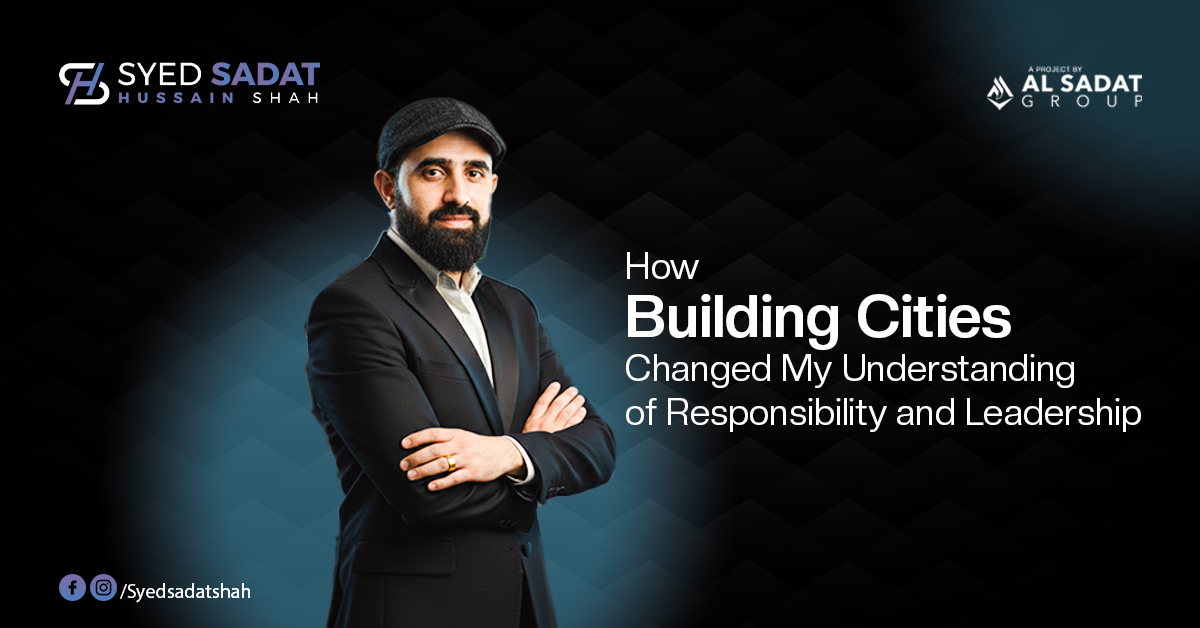
Most people look at a finished building and see concrete, glass, and steel. I used to see it that way too, early on. Years of developing communities taught me something slower to learn: every road, every home, every park, and every family who eventually lives there carries a responsibility far greater than the construction itself.
Leadership Begins Long Before Construction Starts
By the time the first foundation is poured, the real leadership work is already done — or it isn’t, and you find out later, at the worst possible time. It starts with listening to what a community actually needs, not what’s easiest to build. It starts with a promise, usually made years before anyone can verify it: this place will be safe, this place will hold value, this place will still serve your family a generation from now. Leadership, I learned, is the discipline of making a promise you then have to keep, long after the excitement of making it has faded.
Building Communities, Not Just Houses
I stopped thinking of myself as a developer of plots somewhere along the way, and started thinking of myself as someone responsible for where families would raise children. That shift changes every decision. It changes how wide you make a road, how you plan a park, where you put a school. Houses shelter people for a season. Communities shape how children grow up, who their friends become, what they think is normal. That’s a much heavier thing to get right.
Responsibility Is Measured by People’s Trust
I’ve come to believe trust is the only asset that actually compounds. You can rebuild capital. You cannot easily rebuild the trust of a family who believed you when you told them something would be ready by a certain date. Keeping commitments, being transparent when something goes wrong instead of hiding it, thinking in decades rather than quarters — none of that shows up on a balance sheet, but it’s the only thing that actually protects a reputation over twenty-five years.
Every Challenge Became a Leadership Lesson
Markets shift. Costs rise faster than plans account for. Teams need direction when nobody has good news to give them. I’ve made decisions I’d make differently now, and I’ve learned more from the difficult years than the easy ones. Resilience isn’t a personality trait — it’s a habit you build by staying in the room when it would be easier to leave.
Cities Reflect the Values of Their Leaders
Look closely at any community and you can read the priorities of the people who built it. Where the green spaces are, whether the schools were an afterthought or a starting point, who has access to what — none of that is accidental. It’s leadership, made visible in concrete and pathways and sightlines, whether anyone intended it that way or not.
Why Young Leaders Must Think Beyond Success
If I could tell young leaders one thing, it’s this: think past the recognition. Solve real problems. Create opportunities for people who didn’t have them before you arrived. The projects I’m proudest of aren’t the ones that got the most attention — they’re the ones where I can point to a family and say their life is genuinely better because of a decision made years ago.
A Personal Reflection
I didn’t set out to learn humility from real estate. I expected to learn about margins and timelines. What I actually learned, slowly and sometimes painfully, is that responsibility doesn’t scale the way ambition does — it has to be earned again with every project, every commitment, every family who decides to trust you with where they’ll live.
Conclusion
Cities are never built by concrete alone. They are built by vision. Strengthened by trust. And remembered by the lives they improve. Leadership, I have learned, is not about how much we build — it is about how many people live better because we chose to build with responsibility.
Key Takeaways
- Leadership work happens before construction begins — in listening, planning, and the promises you make.
- Trust compounds over decades; it is the hardest asset to rebuild once lost.
- Difficult years teach more about leadership than easy ones.
- Community design reflects the values of the people who built it, whether intentional or not.
- Lasting impact matters more than recognition.
FAQs
What does Syed Sadat Hussain Shah believe leadership means?
He describes leadership as measured not by titles or profits, but by how many people’s lives genuinely improve because of decisions made with responsibility.
How did real estate development shape his leadership philosophy?
Years of building communities taught him that every project carries responsibility to the families who will live there for generations, not just to the completion of a structure.
What does he consider his most valuable asset as a leader?
Trust. He describes it as the one asset that compounds over time and the hardest to rebuild once broken.
What advice does he give young leaders?
To think beyond personal success — to solve real problems, create opportunities, and focus on long-term impact rather than recognition.
How do challenges shape leadership, in his view?
He credits difficult years — market shifts, uncertainty, hard decisions — with teaching him more about resilience and leadership than the easier periods.