
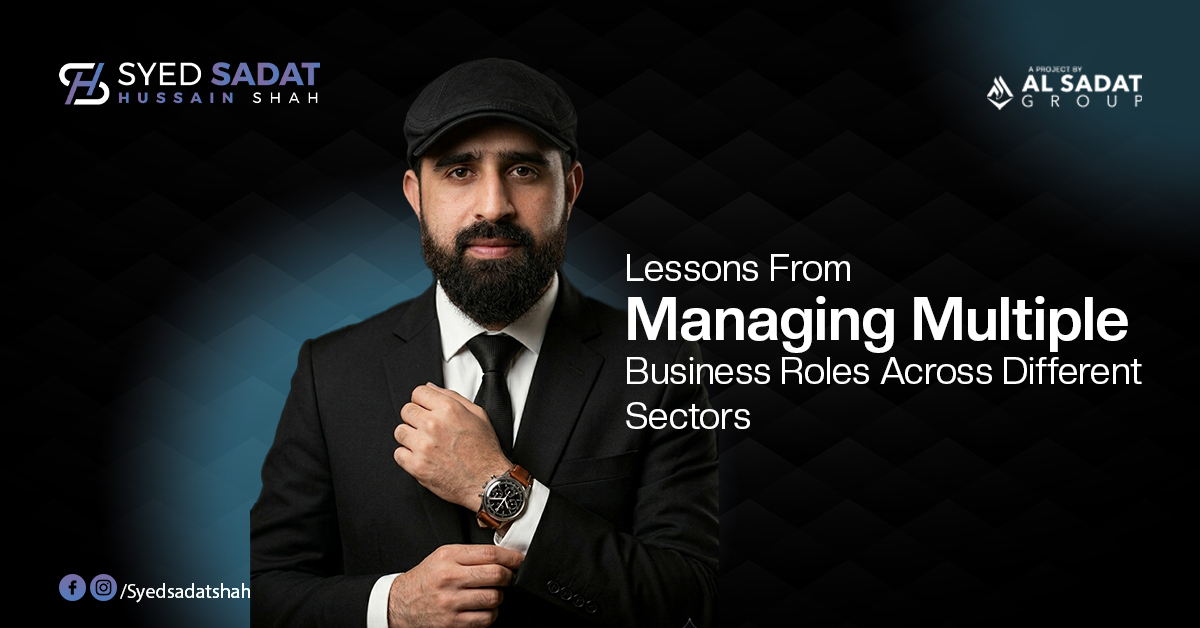
Most leaders I know did not plan to manage several businesses at once. It happens gradually, one responsibility leads to another, and before long, decisions in one industry start informing decisions in a completely different one. I have lived this reality across real estate, hospitality, and civic-facing ventures, and I have come to see it as one of the most underrated forms of leadership education available.
Modern leadership rarely stays confined to a single sector. The skills that matter most, judgment, patience, and the ability to read people, transfer across industries in ways formal training alone cannot teach.
Adaptability Becomes a Habit, Not a Skill
Every industry has its own rhythm. Construction timelines do not behave like hospitality demand cycles, and neither behaves like the slower, relationship-driven pace of civic and community projects. Working across all three forces you to stop expecting one playbook to work everywhere. Adaptability stops being a talking point and becomes the way you actually operate.
Long-Term Thinking Over Short-Term Wins
It is tempting to chase quick results, especially when multiple ventures compete for attention. But the businesses that last are the ones built with a ten-year view, not a ten-week one. I measure decisions by whether I would still defend them a decade from now, not by how they look in this quarter’s numbers.
Leadership Under Pressure
Pressure reveals character faster than success does. Managing several operations at once means problems rarely arrive one at a time. Calm, unhurried decision-making under pressure earns more trust from a team than confidence alone ever could.
Decision-Making Sharpened by Contrast
Seeing how different industries solve similar problems, cash flow, staffing, customer trust, sharpens judgment in ways a single-industry career rarely allows. A lesson learned in property development often reshapes how I approach a hospitality decision months later, and the reverse is just as true.
Building Trust Across Every Sector
Trust behaves the same way in every industry. It is earned slowly and lost quickly. Whether working with a construction crew, a hospitality team, or a community partner, the standard has to stay consistent, or none of it holds together.
Understanding People Before Understanding Markets
Markets shift. People’s underlying motivations, fairness, recognition, security, do not. Leaders who understand people first tend to navigate market shifts with far less disruption to their teams and their reputation.
Balancing Growth With Responsibility
Growth without responsibility is fragile. Every expansion decision gets weighed against a simple question: who does this affect beyond the balance sheet? That thinking shapes how I approach social responsibility in development, where I have argued that a project’s obligation to the people around it does not end once permits are approved.
What One Industry Teaches Another
Real estate taught me patience with timelines I cannot control. Hospitality taught me that service is a daily discipline, not a policy. Civic work taught me that building stronger communities matters more than building structures alone. None of these lessons stayed confined to the sector where I learned them. Each one now shapes how I lead everywhere else.
Sustainable Leadership Is Built on Consistency
Consistency, integrity, and a genuine focus on serving people outlast any single business cycle. Responsible leadership is not a marketing position, it is a daily practice of showing up the same way whether a project is thriving or under strain. That consistency is what earns a leader the right to be trusted with more responsibility over time.
Conclusion
Managing multiple businesses across different sectors has taught me that leadership is not measured by how many ventures a person oversees. It is measured by the impact those ventures leave behind, years after the initial decisions were made. Real success comes from treating every role, in every industry, as an extension of the same responsibility: building something that serves people long after the transaction is complete.
Frequently Asked Questions
What can leaders learn from managing businesses in different industries?
Leaders who manage businesses across sectors typically develop stronger adaptability, sharper decision-making, and a broader understanding of how trust and leadership principles apply differently across industries.
Why is adaptability important for multi-sector leaders?
Adaptability allows leaders to adjust their approach to each industry’s unique pace and challenges, rather than applying a single strategy everywhere, which improves outcomes across all ventures.
How does long-term thinking improve business leadership?
Long-term thinking encourages leaders to make decisions that hold up over years rather than chasing short-term results, which builds more resilient and sustainable businesses.
What role does trust play in responsible leadership?
Trust is foundational to responsible leadership because it is earned through consistent behavior over time and, once lost, is difficult to rebuild across any industry.
How does Syed Sadat Hussain Shah define successful leadership?
Syed Sadat Hussain Shah defines successful leadership by long-term impact and responsibility to people rather than by the number of businesses a person manages.