
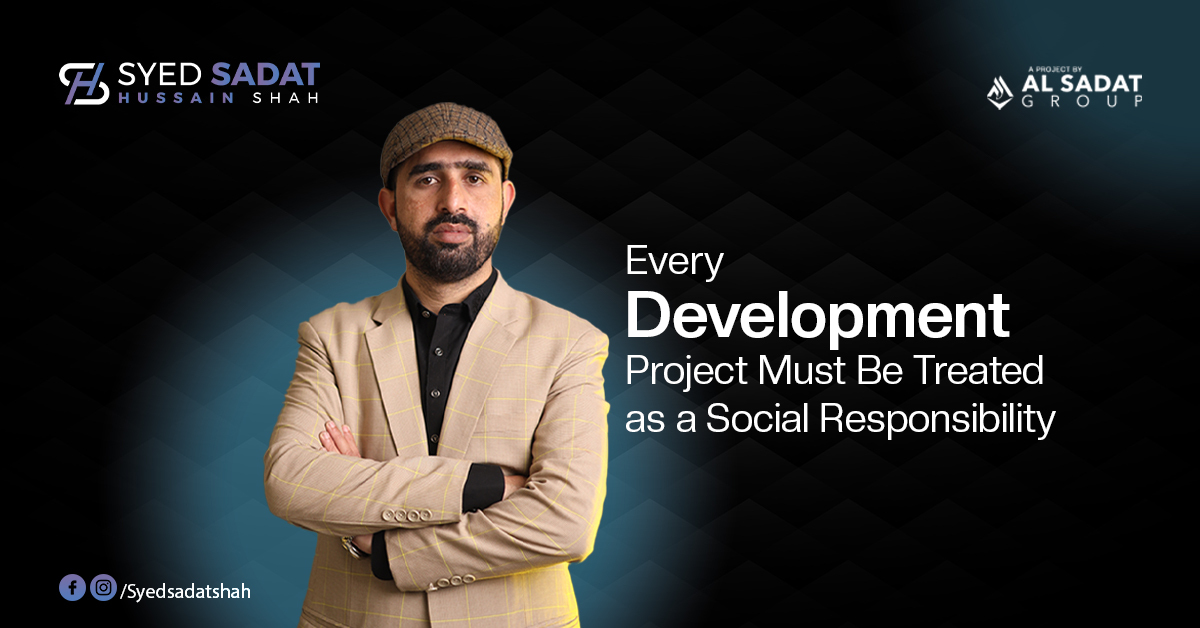
Development is often measured in kilometers of roads, the height of buildings, or the scale of new infrastructure. While these metrics are easy to quantify, they reveal only part of the story. The true measure of any development project is the lasting value it creates for people, communities, and future generations.
This belief sits at the heart of Syed Sadat Hussain Shah’s leadership philosophy. He views development not as the process of constructing physical assets but as an opportunity to improve lives, strengthen communities, and contribute to long-term national progress. When every project is approached as a social responsibility, development becomes more than an investment—it becomes a commitment to society.
Why Development Is More Than Construction
Every development project changes the way people live. It influences where families settle, how children access education, how businesses grow, and how communities interact. Buildings may define skylines, but people define the success of those buildings.
Responsible development creates employment during construction while generating economic opportunities long after completion. It improves access to essential services, encourages entrepreneurship, and helps communities become more connected and resilient. Thoughtful planning can also reduce environmental pressures, improve mobility, and create healthier places to live.
Most importantly, development leaves a legacy. The decisions made today shape the experiences of future generations. A project designed solely for short-term financial gain may struggle to deliver lasting value, while one planned with long-term community benefit in mind can continue creating positive outcomes for decades.
This perspective reflects a broader long-term vision, where every decision considers not only today’s needs but tomorrow’s possibilities. Readers interested in this philosophy can explore more about long-term thinking in long-term vision.
Building Communities, Not Just Infrastructure
Communities do not emerge simply because buildings exist. They grow when development encourages belonging, accessibility, opportunity, and shared experiences.
Syed Sadat Hussain Shah believes successful development begins with understanding how people actually live. Well-designed neighborhoods should provide safe public spaces, accessible transportation, green environments, educational opportunities, and infrastructure that supports everyday life rather than complicates it.
Human-centered planning also recognizes that sustainable urban development extends beyond environmental considerations. It includes creating inclusive spaces where businesses can thrive, families feel secure, and individuals from different backgrounds can participate in community life.
Also Read: Why Patience Is the Strongest Asset in Real Estate Development
Responsible development asks practical questions before construction begins. Will this project improve quality of life? Will it support local employment? Will it strengthen surrounding communities? Will it remain valuable twenty years from now?
When these questions guide decision-making, development becomes an investment in people rather than merely an expansion of physical infrastructure.
This philosophy aligns closely with the idea of turning land into legacy, where projects are evaluated by the positive impact they leave behind instead of their immediate commercial success.
Leadership Means Thinking Beyond Profit
Leadership in development requires balancing commercial objectives with social responsibility. Financial sustainability matters because successful projects must remain economically viable. However, profitability should not be the only measure of success.
Ethical leadership considers the interests of residents, investors, employees, local businesses, and future generations simultaneously. It values transparency, accountability, and decisions that strengthen public confidence over time.
Community trust is built gradually through consistency, integrity, and responsible planning. Once established, that trust becomes one of the most valuable assets any leader can possess.
For Syed Sadat Hussain Shah, leadership is not defined by the size of a project but by the positive influence it creates. Responsible leaders understand that every development decision contributes to the broader social and economic fabric of a nation.
This emphasis on lasting relationships reflects the importance of trust in real estate, where credibility becomes the foundation for sustainable growth and responsible development.
Why Responsible Development Builds Strong Nations
Nations grow stronger when development aligns with long-term public value. Well-planned projects stimulate economic activity, create employment, attract investment, and improve living standards simultaneously.
Responsible development supports entrepreneurship by creating environments where businesses can operate efficiently. It expands opportunities for young professionals by connecting education, housing, transportation, and employment within well-designed communities.
It also strengthens investor confidence. Investors are increasingly drawn toward projects that demonstrate sound governance, sustainable planning, and long-term resilience. Communities built with responsibility tend to retain value because they are designed around human needs rather than short-term market trends.
Sustainable communities also reduce future costs associated with poor planning, inadequate infrastructure, and environmental degradation. Investing responsibly today often prevents significantly larger challenges tomorrow.
Nation building is rarely achieved through isolated projects. It emerges from consistent decisions that prioritize people, encourage innovation, and strengthen institutions. Every responsible development contributes another piece to that larger national story.
A Leadership Philosophy That Looks Beyond the Skyline
Physical landscapes will continue to change as cities expand and economies evolve. Yet the most meaningful legacy of development will never be measured solely by concrete, steel, or architectural design.
It will be measured by stronger communities, greater opportunity, improved quality of life, and the confidence people have in the places they call home.
For Syed Sadat Hussain Shah, every development project represents a responsibility that extends beyond construction. It is an opportunity to create lasting value, build trust, and contribute to a future where development consistently improves lives—not simply transforms landscapes.
When leaders embrace this people-first philosophy, development becomes more than growth. It becomes a lasting investment in society itself.