
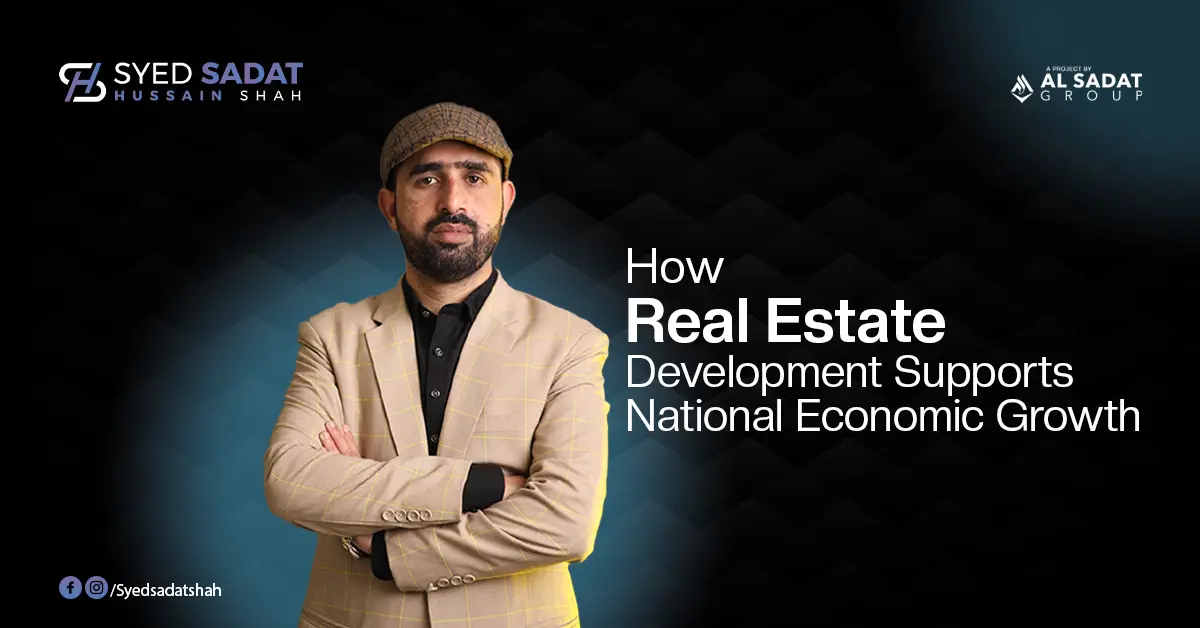
I have been involved in real estate development for many years, and there is one thing I always tell people: when the housing sector grows, the entire country benefits.
In Pakistan, real estate is more than just buying and selling land. It is one of the most powerful tools for national economic development. Used wisely, it can create jobs, grow industries, stabilize the economy, and improve the lives of ordinary people.
I would like to offer my honest opinion, not as a developer trying to sell something, but as someone who has seen firsthand what real estate development can bring to a country like Pakistan.
Real Estate as an Economic Driver
Real estate Pakistan is one of the largest contributors to our GDP. That is a fact that often gets ignored in public conversation.
When a housing project starts, it does not just build homes. It starts a chain of economic activity. Cement is purchased. Steel is ordered. Contractors are hired. Architects, engineers, and surveyors get to work. Local shops near the site start doing more business.
This is what economists call a multiplier effect. One investment creates many jobs and many transactions. Real estate development, done properly, is one of the fastest ways to generate that kind of broad economic activity.
How the Housing Sector Supports Growth
Pakistan’s population is growing fast. Our cities are expanding. And the demand for housing is rising every year. The housing sector Pakistan is trying to meet that demand — but there is still a very large gap.
Also Read: Why Youth Employment Requires Practical Skills More Than Theory
When that gap is filled responsibly — through planned communities, regulated developments, and quality construction — it does not just put roofs over people’s heads. It builds permanent economic infrastructure.
Roads are built. Electricity and water connections are extended. Schools and clinics follow. Entire communities are created. And all of that becomes a permanent part of the national economy.
Impact on Employment and Industries
I genuinely believe that property investment Pakistan is one of the most effective employment generators we have — if we organise it properly.
Think about what a single housing project needs. Bricklayers. Plumbers. Electricians. Painters. Carpenters. Delivery workers. Security staff. Marketing teams. Legal professionals. Banks that provide mortgages. Insurance companies. Furniture manufacturers.
The list goes on. Real estate development touches almost every sector of the economy. When the sector grows, employment grows with it. And that employment is spread across skill levels — from daily-wage workers to qualified engineers.
“When the construction industry is active, Pakistan is working. It is that simple.”
Property Investment and National Stability
When people invest in property, they are making a long-term commitment to a country. They are saying: I believe in this place. I am putting my money here.
That confidence matters. Economic growth Pakistan needs — more than anything — is investor confidence. And a stable, growing real estate sector sends exactly that signal.
Property investment Pakistan also helps protect ordinary families against inflation. A family that owns a home has a stable asset. They are not at the mercy of rising rents or economic shocks in the same way that a family without property is.
This is why housing access is not just a social issue. It is an economic stability issue.
The Future of Real Estate Development in Pakistan
The future of real estate development in Pakistan should be about planning, not just building.
We need smart communities with proper infrastructure. We need developments that think about water supply, traffic flow, green spaces, and digital connectivity — not just square footage.
The countries that have developed fastest did not just build more. They built better. Pakistan has that same opportunity. Our land, our population, and our economic potential are all there. What we need is disciplined, well-planned development.
Modern housing projects, if done right, will attract foreign investment, reduce urban overcrowding, and create the kind of environment where businesses want to set up and families want to stay.
A Personal Perspective
As I see it, real estate development is not just a business. It is a responsibility. Every project we build becomes part of someone’s life — and part of our country’s story. I have always believed that if we plan carefully, invest responsibly, and think long-term, the housing sector can be one of Pakistan’s greatest strengths. Not just economically. But socially and nationally as well.
That is the standard I hold myself to. And I hope it is the standard the entire sector moves toward.
Conclusion
Real estate Pakistan is far more than a property market. It is a pillar of our national economy.
It creates jobs. It builds industries. It grows communities. It attracts investment. And when managed well, it gives ordinary Pakistani families a secure place to build their lives.
I am optimistic about where we are going. The challenges are real — but so is the potential. With better planning, stronger regulation, and a long-term national vision, the housing sector Pakistan can deliver genuine, lasting growth.
That is something I am committed to working toward. And I believe many others in this sector share the same goal.